
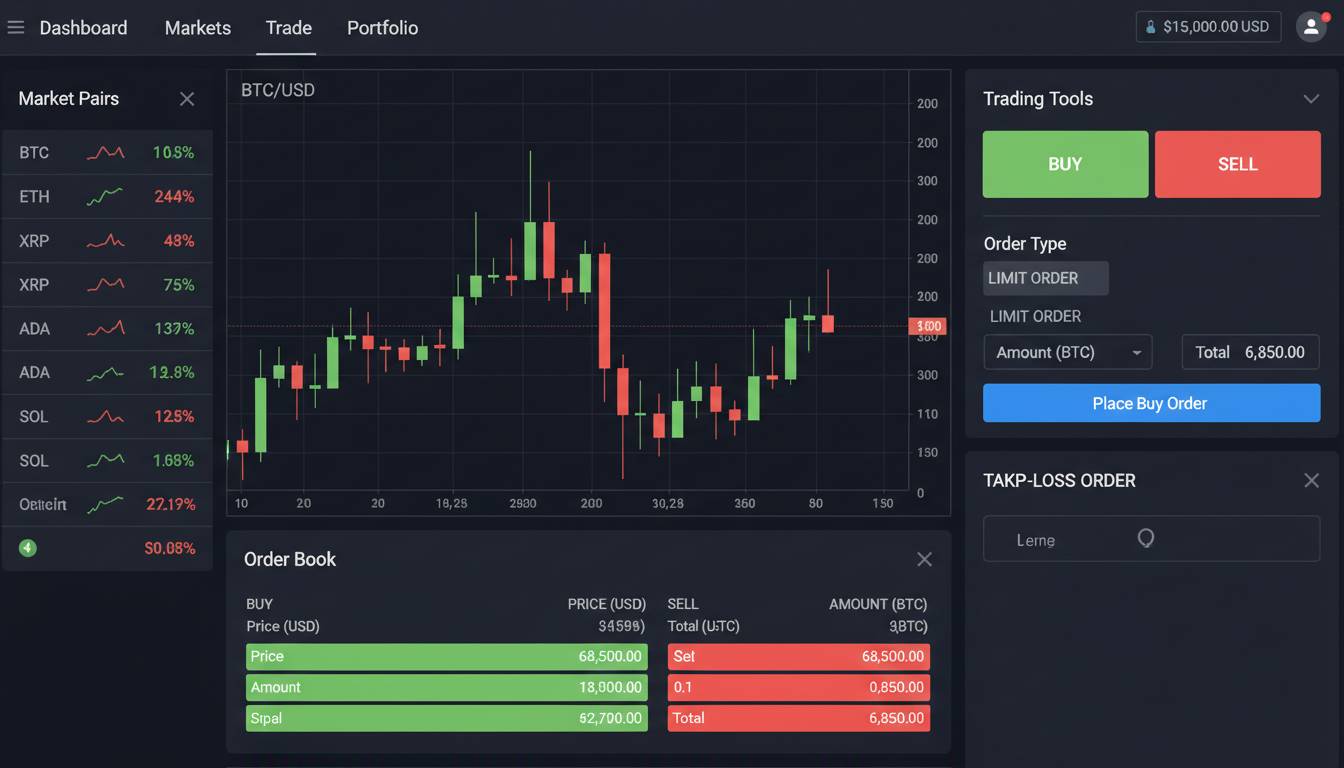
The cryptocurrency market has grown from a strange experiment into something worth billions in daily trading volume. If you’re new to this, understanding the basics matters—not because it’s impossibly complex, but because the space is full of ways to lose money if you’re not paying attention.
What is Cryptocurrency Trading?
Cryptocurrency trading means buying and selling digital assets on online platforms called exchanges. Unlike stock markets that close at the end of the day, crypto markets run 24/7. That means prices can move while you’re sleeping, and opportunities don’t wait for business hours.
Most trading comes down to one simple idea: you think the price will go up, you buy. You think it’ll go down, you sell (or “short” it). You’re trying to profit from price swings in coins like Bitcoin, Ethereum, or any of the thousands of other cryptocurrencies out there.
These markets run on blockchain technology—a public ledger where every transaction gets recorded. That transparency is part of what makes crypto different from traditional finance. Whether that’s actually “revolutionary” depends on who you ask, but the mechanics are worth understanding before you put money in.
How to Start Cryptocurrency Trading
Here’s a practical path forward if you want to start trading.
Step 1: Learn first
Spend some time understanding blockchain basics and how crypto markets work. You don’t need a computer science degree, but you should know what a private key is, why exchanges can be hacked, and what “volatility” actually looks like in practice. Free resources from major exchanges and financial sites are a good starting point.
Step 2: Pick an exchange
Your choice of platform matters for security and usability. Coinbase, Binance, and Kraken are the big names most beginners start with. Coinbase is more regulated (good if you’re in the US and care about legal compliance). Binance has more coins and lower fees but a more complicated interface. Look at security features, fees, and what coins are available before you commit.
Step 3: Get a wallet (eventually)
Exchanges give you a built-in wallet, but it’s not ideal for long-term storage. Hardware wallets from Ledger or Trezor keep your coins offline, which is much safer against hacks. For small amounts you’re actively trading, software wallets work fine.
Step 4: Start small
Don’t put in money you can’t afford to lose. Really. The temptation to “see how it goes” with a meaningful amount is real, but the market can wipe you out quickly. Start with $50 or $100. Learn how it feels when that becomes $40 or $150. The emotional part is harder than the technical part.
Step 5: Have a plan
Decide before you trade what your strategy is. Are you holding for years? Trying to catch short-term swings? Whatever you choose, know when you’ll sell before you buy. Wingin’ it in a volatile market is how people make emotional decisions they regret.
Best Cryptocurrency Trading Platforms
Different platforms serve different needs. Here’s the breakdown:
Centralized Exchanges (CEX)
These are the big names—Coinbase, Binance, Kraken. They hold your money and match your trades with other users. High liquidity, lots of coin options, and relatively easy to use. Coinbase is the most US-regulated, which matters if legal compliance is a priority.
Decentralized Exchanges (DEX)
Uniswap, PancakeSwap, and similar platforms let you trade directly from your wallet without a middleman. More privacy, more control, but often lower trading volume and a steeper learning curve. Not ideal for your first time.
Brokerages
eToro and Crypto.com let you buy crypto at fixed prices without dealing with order books. Simpler, but you pay for that convenience with higher fees.
Cryptocurrency Trading Strategies
Find an approach that fits your schedule and personality:
Day Trading
Buying and selling multiple times within a day to catch small price movements. Requires hours of screen time, fast decisions, and high stress tolerance. Most people lose money at this. Not recommended as a starting point.
Swing Trading
Holding positions for days or weeks to capture medium-term trends. Less time-intensive than day trading, but still requires following charts and market news.
HODLing
Buy and hold for years, ignoring daily noise. Relies on the idea that crypto will be worth more eventually. Simpler than active trading, but you still need to pick which coins have a future.
Dollar-Cost Averaging
Invest a fixed amount monthly regardless of price. Takes the timing question off the table. Popular with people who don’t want to think about trading constantly.
Risks of Cryptocurrency Trading
The risks here are real. Don’t let anyone tell you otherwise.
Volatility
Prices crash hard. Bitcoin has dropped more than 30% in a single day multiple times. Many altcoins have lost 90%+ of their value and never recovered. The same volatility that creates profit potential creates loss potential.
Regulation
Governments are still figuring out how to handle crypto. A sudden regulatory change can make a coin or trading method illegal overnight. What you can do today might not be legal next year.
Security
Exchanges get hacked. Wallets get compromised. Once crypto leaves your wallet, it’s gone. Two-factor authentication, hardware wallets, and good password habits are non-negotiable if you’re serious about holding.
Your own brain
Fear and greed are the enemies. Selling in a panic when prices drop, buying at the top because everyone else is excited—these are the mistakes that cost people money. A trading plan helps, but it’s hard to stick to when your account is bleeding.
Frequently Asked Questions
Is cryptocurrency trading profitable?
It can be. Most people lose money, though. Success depends on knowledge, discipline, and honestly, some luck. If anyone guarantees profits, they’re lying. Start with money you can afford to lose and realistic expectations.
How do I start cryptocurrency trading legally?
In the US, you need to be 18+. Use exchanges registered with FinCEN. Report your trades on your taxes—the IRS treats crypto as property, so capital gains apply. Some states have additional rules. Look up your state’s requirements before trading.
Can you lose money in cryptocurrency trading?
Yes. Easily. You can lose everything you put in. Unlike bank accounts, crypto isn’t FDIC-insured. There’s no protection if the price goes to zero.
What is the best cryptocurrency trading platform for beginners?
Coinbase is the most beginner-friendly for US users. The fees are higher than some alternatives, but the interface is clean and the regulatory compliance is solid. Kraken and Crypto.com are also good options with different fee structures.
Is cryptocurrency trading legal in the United States?
Yes, but it’s regulated. The CFTC treats Bitcoin and Ethereum as commodities. The SEC has gone after coins it considers securities. You have to report trades and pay taxes. The rules are still evolving.
What is the minimum amount needed to start cryptocurrency trading?
Most exchanges let you start with $10 or less. But fees hit small trades hard—a $2 fee on a $10 purchase is brutal. Trade with amounts that make sense for the fee structure, and remember: only use money you won’t miss.
Conclusion
Crypto trading isn’t a shortcut to wealth. It’s a real market with real risks, and most people who jump in without learning lose money. That said, if you approach it thoughtfully—starting small, learning the basics, using reputable platforms, and having a plan—it’s possible to participate without getting destroyed.
The people who do best treat it like any other skill: they put in the time, they manage their risk, and they don’t let greed or fear make their decisions for them. The rest is up to you.