
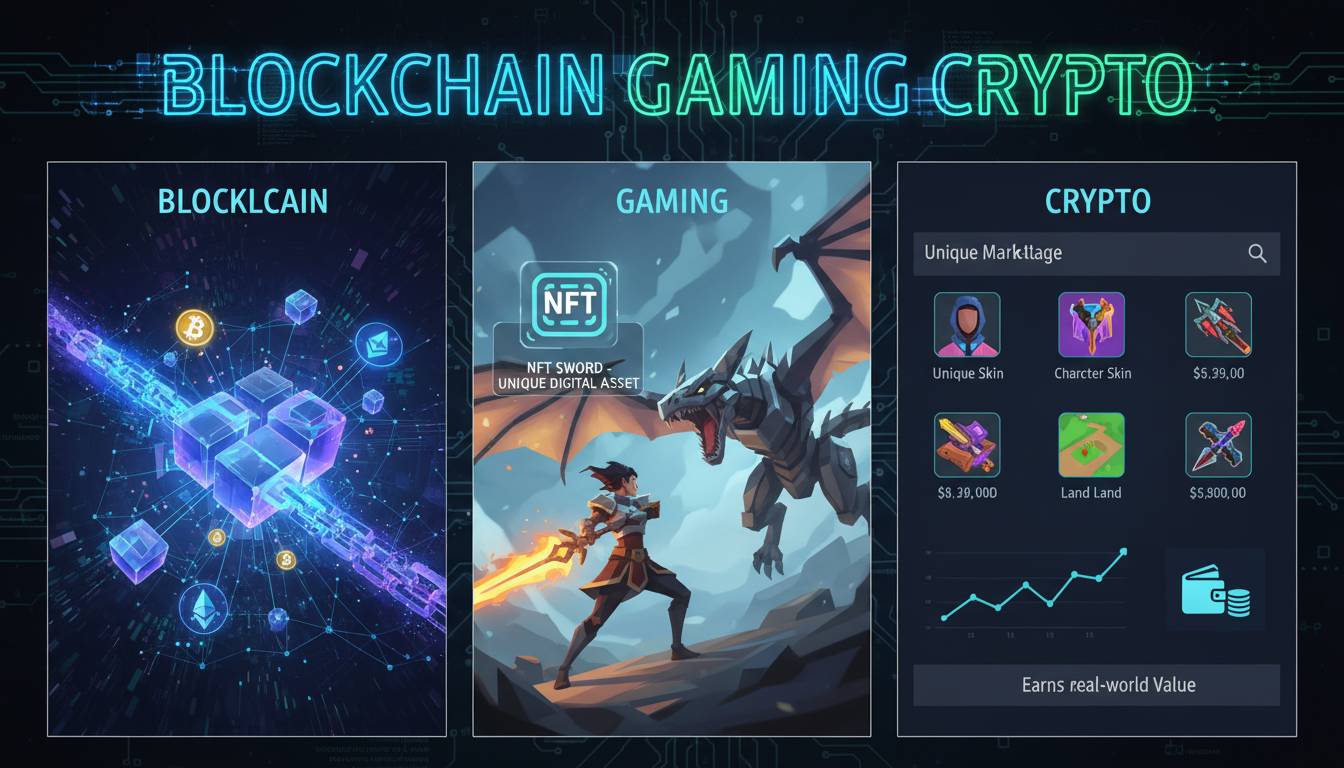
The intersection of blockchain technology and gaming has created a new category within the digital asset industry. This guide covers how blockchain gaming works, what platforms exist, and what players and investors should consider before participating.
Understanding Blockchain Gaming Fundamentals
Blockchain gaming combines decentralized ledger technology with interactive entertainment. In these games, players own their in-game assets as tokens on a blockchain, rather than having items exist only on a company’s servers.
The technology runs on various blockchain networks, with Ethereum, Solana, and BNB Chain hosting most popular projects. Each platform has different trade-offs: Ethereum has the largest ecosystem but higher transaction fees during busy periods, while newer chains often offer faster and cheaper transactions with smaller user bases.
Smart contracts handle transactions and enforce game rules automatically. This removes the need for a central authority and lets players verify scarcity, trading history, and authenticity of digital assets directly on the blockchain.
Leading Platforms in Blockchain Gaming
Several platforms have gained prominence in this space. Axie Infinity, developed by Sky Mavis in Vietnam, helped popularize the play-to-earn model. Players collect, breed, and battle fantasy creatures called Axies, earning Smooth Love Potions (SLP) tokens that can be sold for real money.
The Sandbox, built on Ethereum, lets users create, share, and monetize their own gaming experiences using voxel-based tools. The MANA token powers the virtual LAND marketplace and in-game purchases.
Decentraland offers a virtual reality platform where users explore, socialize, and trade virtual real estate. MANA facilitates transactions for LAND parcels, wearables, and other digital assets.
How Play-to-Earn Models Work
Play-to-earn changes the traditional gaming economy. In regular games, players spend hours grinding for items that have no value outside the game. Blockchain games let players earn tokens with actual monetary value.
Players earn tokens through activities like completing quests, winning battles, or participating in governance. These tokens can be held as investments, traded on cryptocurrency exchanges, or converted to fiat currency. Some players in regions with weaker currencies have used this as income, though volatility is significant.
Critics note the model can resemble Ponzi schemes where later players need to recruit others to sustain token values. Sustainable projects use token burns, staking rewards, and utility functions to create genuine economic value. Understanding tokenomics matters before participating.
Getting Started with Blockchain Gaming
Entering blockchain gaming requires several steps. First, set up a cryptocurrency wallet compatible with your chosen blockchain. MetaMask supports Ethereum and EVM-compatible networks. Phantom works for Solana users. These wallets store private keys and enable interactions with decentralized applications.
Next, acquire the native cryptocurrency for your chosen blockchain to pay transaction fees. Purchasing through regulated exchanges like Coinbase or Kraken requires identity verification but provides a secure on-ramp. Always confirm addresses match your wallet’s network before transferring funds.
Buying in-game assets typically requires connecting wallets to marketplaces within games or external NFT marketplaces like OpenSea. Security matters because blockchain transactions cannot be reversed. Verify contract addresses, use hardware wallets for significant holdings, and never share seed phrases.
Market Trends and Investment Considerations
The blockchain gaming market grew rapidly in 2021 and early 2022 before declining alongside broader cryptocurrency markets. Despite this downturn, major gaming companies continue exploring blockchain integration. Ubisoft, Electronic Arts, and Square Enix have announced blockchain initiatives, suggesting potential mainstream adoption.
Investment in blockchain gaming carries substantial risks beyond typical market volatility. Smart contract bugs have caused hacks resulting in player losses. Regulatory uncertainty remains a concern as governments worldwide consider how to tax and regulate virtual currency earnings. Never invest more than you can afford to lose. Research any project thoroughly before committing funds.
The sector also faces environmental criticism due to energy consumption on proof-of-work blockchains. Many projects are transitioning to proof-of-stake mechanisms, which use significantly less energy.
Frequently Asked Questions
What exactly is blockchain gaming?
Blockchain gaming refers to video games built on blockchain technology that incorporate cryptocurrency tokens and NFTs. These games let players own in-game assets as tokens, trade them on open markets, and earn cryptocurrency through gameplay.
Are blockchain games free to play?
Some blockchain games offer free-to-play models with limited earning potential, while others require initial investments to purchase characters, equipment, or land. Games like Axie Infinity require buying at least three Axie characters to start earning, which costs several hundred dollars.
Is blockchain gaming profitable?
Profitability varies significantly depending on token prices, gameplay skills, time invested, and market conditions. Many players lose money. Successful participants often dedicate significant time and hold digital assets that have appreciated in value.
How do I stay safe when playing blockchain games?
Only use official website links, never share your seed phrase, verify all contract addresses before transactions, consider hardware wallets for significant holdings, and research projects thoroughly before investing. Be wary of unsolicited investment advice and guaranteed return promises.
Can I convert gaming earnings to regular currency?
Yes, most blockchain gaming tokens can be sold on cryptocurrency exchanges and converted to fiat currency. This process may require identity verification, and tax obligations may apply to earnings in many jurisdictions.
What blockchain networks host the most popular gaming projects?
Ethereum hosts the largest ecosystem, followed by BNB Chain, Solana, and Polygon. Each offers different trade-offs regarding transaction costs, speed, and game availability.
Conclusion
Blockchain gaming offers players new ownership and earning opportunities in digital entertainment. The sector presents real possibilities, but participants should understand the significant risks involved. As technology evolves and regulations develop, blockchain gaming may become more mainstream, though prospective players should educate themselves thoroughly before participating.