
The cryptocurrency investment landscape keeps shifting as digital assets become more common among American investors. With dozens of platforms competing for attention, choosing the right one can significantly impact your returns and security. This guide examines the leading platforms available to US investors, evaluates their key features, and provides actionable insights for making informed investment decisions in 2024.
How We Evaluated the Top Platforms
Our evaluation combines analysis of platform features, security, fees, and user experience to deliver recommendations. We examined over 20 major cryptocurrency investment platforms operating in the United States, focusing on criteria that matter most to individual investors.
The assessment framework includes security infrastructure evaluation, which looks at cold storage practices, two-factor authentication requirements, insurance coverage for digital assets, and historical security incident records. Fee analysis examines trading commissions, deposit and withdrawal costs, and any hidden charges that could eat into investment returns over time. We also considered regulatory compliance, preferring platforms registered with the SEC or CFTC and those with robust KYC procedures.
User experience assessment evaluated platform responsiveness across desktop and mobile interfaces, customer support quality, and educational resources for beginners. This multi-faceted approach ensures our recommendations serve diverse investor needs, from newcomers to experienced traders.
The Leading Cryptocurrency Investment Platforms in 2024
Coinbase: Best for Beginners
Coinbase remains the most accessible entry point for new cryptocurrency investors in the United States. The platform’s intuitive interface simplifies buying and selling, making it particularly suitable for those unfamiliar with digital asset trading. Founded in 2012 and headquartered in San Francisco, Coinbase has grown to serve over 100 million users globally.
The platform offers approximately 250 tradable cryptocurrencies, providing adequate diversity for most investment strategies. Coinbase charges a flat fee structure that varies based on transaction size, with larger trades getting more competitive rates. Advanced traders can access Coinbase Pro for lower fees and more sophisticated trading tools.
Security features include two-factor authentication, biometric app access, cold storage for 98% of customer funds, and FDIC insurance for USD balances up to $250,000 through partner banks. The platform maintains regulatory compliance across all US states where it operates, providing peace of mind for security-conscious investors.
Binance: Best for Trading Volume and Variety
Binance operates the world’s largest cryptocurrency exchange by trading volume and offers US investors access to an extensive selection of digital assets. The platform provides over 350 cryptocurrencies for US users through its Binance.US subsidiary, which complies with US regulatory requirements.
Fee structures on Binance.US remain competitive, with maker fees starting at 0.1% and taker fees beginning at 0.1% for standard accounts. Users can reduce trading fees further by holding Binance Coin (BNB) or achieving higher trading volumes. The platform supports over 500 trading pairs, enabling sophisticated investment strategies.
Advanced trading features include limit orders, stop-loss orders, and margin trading for eligible users. The platform’s charting tools integrate with TradingView, providing professional-grade technical analysis capabilities. Binance.US maintains robust security measures including cold storage, multi-tiered account security, and the Secure Asset Fund for Users (SAFU), which provides emergency insurance reserves.
Kraken: Best for Security Features
Kraken has established itself as the security-focused choice among cryptocurrency investment platforms, earning recognition for its transparent security practices and commitment to user asset protection. The platform has operated since 2011 without any major security breaches affecting user funds.
The platform offers over 220 cryptocurrencies with competitive fee structures. Maker fees start at 0.16% and taker fees begin at 0.26%, with volume-based discounts available for active traders. Kraken provides instant buy options for popular cryptocurrencies using debit cards, along with traditional bank transfers.
Security infrastructure includes cold storage for all digital assets, hardware security modules for encryption, and multi-geographic distribution of private keys. The platform gives users comprehensive control over their account security settings, including master keys, time-delayed withdrawals, and PGP encryption for email communications. Kraken maintains proof of reserves, allowing users to independently verify that their assets are fully backed.
Crypto.com: Best for Mobile Experience
Crypto.com has distinguished itself through a feature-rich mobile application that delivers a comprehensive cryptocurrency investing experience. The platform offers a crypto debit card that allows users to spend their digital assets at over 60 million merchants worldwide, earning up to 5% cashback on purchases.
The platform supports over 250 cryptocurrencies and provides competitive fee structures through its tiered maker-taker model. Crypto.com differentiates itself through yield-earning opportunities, allowing users to stake their holdings and earn annual percentage yields on assets including Bitcoin, Ethereum, and stablecoins.
The mobile application integrates trading, staking, and NFT functionality in a single interface, making it particularly attractive for users seeking an all-in-one cryptocurrency management solution. Security features include cold storage, multi-factor authentication, and the platform’s proprietary Cronos blockchain ecosystem for enhanced functionality.
Gemini: Best for Regulatory Compliance
Gemini positions itself as the most regulatory-compliant cryptocurrency investment platform available to US investors. Founded by the Winklevoss twins in 2014, the New York-based exchange operates under strict oversight from the New York Department of Financial Services (NYDFS).
The platform offers approximately 100 cryptocurrencies and maintains full reserve transparency, publishing monthly audit reports demonstrating that customer assets are fully backed. Gemini’s fee structure uses a maker-taker model with rates ranging from 0.35% to 0.40% depending on trading volume.
Regulatory advantages extend to insurance coverage and institutional-grade custody solutions. Gemini provides crime insurance protection for digital assets held on the platform and offers Gemini Custody for institutional investors requiring enhanced security and compliance features. The platform’s emphasis on regulatory compliance makes it particularly suitable for investors prioritizing legal certainty and institutional-grade security standards.
Key Features to Consider When Choosing a Platform
Security Measures and Asset Protection
Security represents the most critical consideration when selecting a cryptocurrency investment platform. Unlike traditional bank accounts, cryptocurrency investments lack FDIC protection, meaning users bear responsibility for securing their digital assets.
The most secure platforms utilize cold storage, keeping the majority of user funds in offline wallets disconnected from internet connectivity. Multi-signature authorization requirements add additional protection layers, ensuring that no single party can access funds unilaterally. Two-factor authentication through authenticator applications provides stronger protection than SMS-based verification, which remains vulnerable to SIM-swapping attacks.
Insurance coverage varies significantly across platforms. Some exchanges maintain dedicated insurance funds, while others provide limited coverage or none at all. Users holding substantial cryptocurrency assets should consider transferring holdings to personal wallets while using exchange platforms primarily for trading activities.
Fee Structures and Trading Costs
Trading fees directly impact investment returns and can compound significantly over time, particularly for active traders. Fee structures typically follow maker-taker models, where makers (those providing liquidity) receive slightly lower fees than takers (those removing liquidity).
Beyond trading commissions, investors should account for deposit and withdrawal fees, which vary by payment method and cryptocurrency. Network fees for blockchain transactions, particularly during periods of high network congestion, can substantially increase costs for certain cryptocurrencies.
Platforms often offer fee reductions for higher trading volumes or for holding native platform tokens. However, investors should evaluate whether these incentives align with their trading strategies before committing to platforms primarily for fee discount programs.
Supported Cryptocurrencies and Trading Pairs
Investment flexibility depends significantly on the range of available cryptocurrencies and trading pairs. While Bitcoin and Ethereum dominate market capitalization, investors seeking exposure to emerging tokens require platforms supporting broader selections.
Trading pair availability determines investment options, as users cannot directly exchange between any two cryptocurrencies without sufficient liquidity or available trading pairs. Platforms with extensive trading pair selections provide greater strategy flexibility, enabling users to execute complex portfolio rebalancing and arbitrage strategies.
User Experience and Platform Accessibility
The cryptocurrency learning curve can prove steep for newcomers, making user experience particularly important for first-time investors. Platform interfaces vary significantly in complexity, with some offering streamlined experiences focused on basic buying and selling while others provide advanced trading terminals with comprehensive charting capabilities.
Mobile accessibility has become increasingly important as users manage portfolios across multiple devices. The best platforms offer synchronized experiences across desktop and mobile applications, enabling users to monitor positions and execute trades regardless of their device preference.
Customer support quality varies considerably across platforms, and the ability to resolve issues quickly becomes critical during market volatility or technical difficulties. Platforms offering 24/7 support through multiple channels, including phone support for urgent matters, provide added peace of mind for investors.
Regulatory Landscape for Crypto Investment Platforms in the US
The regulatory environment for cryptocurrency investment platforms continues developing as federal and state authorities establish frameworks for digital asset oversight. The SEC has taken enforcement actions against several platforms for offering unregistered securities, while the CFTC asserts jurisdiction over cryptocurrency derivatives and commodities.
State-level regulations add complexity, with some states requiring specific money transmitter licenses. New York’s BitLicense represents one of the most stringent regulatory requirements, with compliance costs limiting platform availability in the state. Platforms operating under regulatory oversight provide investors with greater legal protections and recourse options.
The ongoing regulatory evolution creates both challenges and opportunities for investors. Compliant platforms may face higher operational costs but offer enhanced legitimacy and investor protections. Investors should verify platform regulatory status and understand the implications for asset protection and legal recourse before committing funds.
Conclusion
Selecting the optimal cryptocurrency investment platform requires careful evaluation of individual priorities, including security requirements, fee sensitivity, trading experience, and regulatory preferences. The platforms highlighted in this guide represent the leading options available to US investors in 2024, each offering distinct advantages across different evaluation criteria.
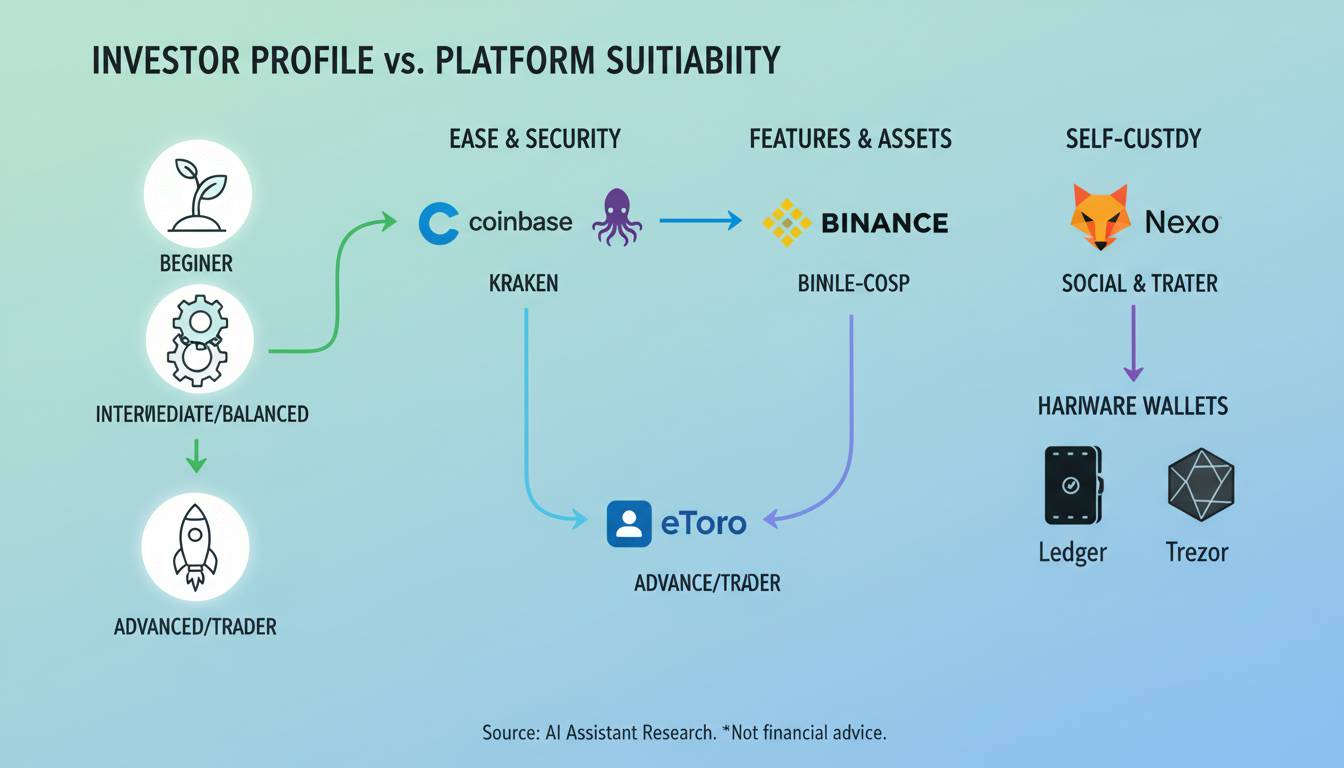
For beginners prioritizing ease of use and regulatory compliance, Coinbase and Gemini provide accessible entry points with robust security infrastructure. Active traders seeking low fees and extensive trading options may find Binance.US or Kraken more suitable. Users valuing integrated mobile experiences and yield-earning opportunities should consider Crypto.com.
Regardless of platform selection, investors should maintain awareness of the inherent risks associated with cryptocurrency investments. Diversification across platforms, conservative storage practices for long-term holdings, and ongoing education about market developments remain essential practices for building sustainable cryptocurrency portfolios.
Frequently Asked Questions
What is the best cryptocurrency investment platform for beginners?
Coinbase and Gemini rank among the best platforms for beginners due to their intuitive interfaces, extensive educational resources, and strong regulatory compliance. Both platforms offer straightforward buying processes and provide clear explanations of cryptocurrency concepts for users new to digital asset investing.
Are cryptocurrency investment platforms safe to use?
Leading cryptocurrency investment platforms implement robust security measures including cold storage, two-factor authentication, and insurance protections. However, no platform is completely immune to risk. Users should enable all available security features, avoid storing large holdings on exchange platforms, and research platform security histories before committing funds.
What fees should I expect when using cryptocurrency investment platforms?
Trading fees typically range from 0.1% to 0.5% per transaction, with some platforms offering lower rates for higher volumes or native token holders. Additional fees may apply for deposits, withdrawals, and certain payment methods. Users should review complete fee schedules before beginning trading activities.
How do I choose between different cryptocurrency platforms?
Consider your priorities including security requirements, trading experience level, fee sensitivity, desired cryptocurrency selection, and regulatory preferences. Testing platforms with small initial deposits allows investors to evaluate user experiences before committing larger amounts.
Can I transfer cryptocurrency between different platforms?
Yes, most platforms support cryptocurrency transfers between exchanges. Users must ensure they select the correct blockchain network when sending funds, as sending cryptocurrencies on incorrect networks can result in permanent loss. Both sending and receiving platforms must support the specific cryptocurrency being transferred.
Do cryptocurrency investment platforms offer tax reporting features?
Many platforms provide transaction histories and tax documents for US investors, including Form 1099 reports where applicable. However, tax obligations vary based on individual circumstances and trading activities. Users should consult qualified tax professionals regarding cryptocurrency tax reporting requirements.