
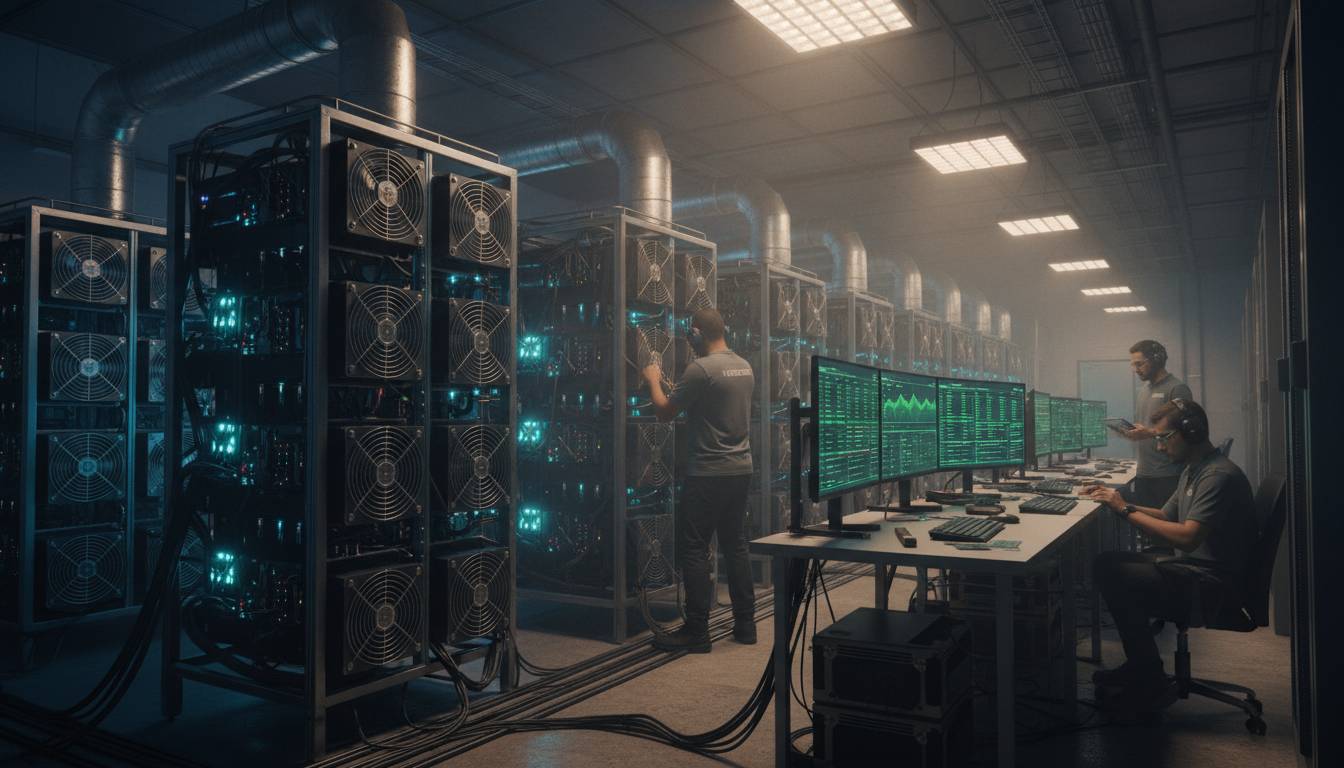
The cryptocurrency mining landscape in 2025 presents a complex and evolving picture for miners seeking to maximize their returns. With Bitcoin reaching new all-time highs, network difficulty climbing steadily, and energy costs remaining a critical factor, profitability calculations have become more nuanced than ever before. This comprehensive analysis examines the key factors driving mining profitability, the technological advancements reshaping the industry, and the strategic approaches that successful miners are employing to maintain competitive edge in an increasingly sophisticated market.
The Current State of Cryptocurrency Mining Profitability 2025
The year 2025 has witnessed remarkable shifts in the cryptocurrency mining sector, driven primarily by Bitcoin’s price appreciation and the upcoming halving cycle. As of mid-2025, Bitcoin trades at levels that have reignited interest in mining operations across the United States and globally. However, the relationship between Bitcoin’s price and mining profitability is not straightforward, as network difficulty adjustments and operational costs continue to play decisive roles in determining net returns.
Network difficulty has reached unprecedented levels, with the Bitcoin hash rate surpassing 500 exahashes per second. This dramatic increase in computational competition means that individual miners and smaller operations face mounting pressure to maintain profitability. The mining difficulty adjustment mechanism, designed to maintain consistent block times, responds to the total computational power on the network, creating an arms race among miners seeking to capture block rewards.
According to industry data, the average cost to mine one Bitcoin in the United States ranges between $35,000 and $45,000, depending on electricity costs and equipment efficiency. This figure represents a significant decrease from previous cycles, thanks to advancements in application-specific integrated circuit (ASIC) technology and the migration to more energy-efficient mining operations. However, regional variations remain substantial, with miners in areas with lower electricity costs maintaining significantly higher profit margins.
Key Factors Influencing Mining Returns
Understanding the multifaceted nature of mining profitability requires examining several interconnected variables that collectively determine whether an operation generates positive returns.
Electricity Costs and Energy Efficiency
Electricity expenses constitute the largest ongoing operational cost for cryptocurrency miners, typically accounting for 60 to 80 percent of total expenses. In 2025, the U.S. energy landscape has presented both challenges and opportunities for mining operations. Areas with abundant renewable energy sources, such as Texas, Wyoming, and parts of the Pacific Northwest, have attracted mining operations seeking to minimize energy costs while meeting environmental, social, and governance (ESG) considerations.
The average industrial electricity rate in the United States stands at approximately 8 to 12 cents per kilowatt-hour, though rates can be significantly lower in regions with excess power generation capacity. Miners who have secured long-term power purchase agreements (PPAs) at favorable rates maintain substantial competitive advantages over those subject to volatile retail electricity markets. The rise of grid-responsive mining, where operations adjust consumption based on grid demand, has also created new revenue streams through demand response programs.
ASIC Hardware Performance
The continuous evolution of mining hardware remains a critical factor in determining profitability. Leading ASIC manufacturers have introduced next-generation machines in 2025 that offer improved hash rates while consuming less power per unit of computation. The most efficient machines currently available achieve energy efficiencies below 20 joules per terahash, representing a significant improvement over equipment from just two years prior.
For individual miners, the choice between purchasing new equipment versus continuing operations with existing hardware involves complex calculations factoring in hardware depreciation, electricity costs, and anticipated Bitcoin prices. The operational lifespan of ASIC equipment typically spans three to five years before becoming economically unviable, making timing critical for capital allocation decisions.
Bitcoin Price and Market Dynamics
The price of Bitcoin remains the most significant single variable affecting mining profitability. The 2025 market has seen substantial volatility, with institutional adoption continuing to drive long-term price appreciation. Miners who hold portions of their mined Bitcoin rather than immediately selling have benefited from price appreciation, though this strategy introduces additional risk exposure.
The relationship between Bitcoin price and network hash rate demonstrates a generally positive correlation, as higher prices attract more computational power to the network. This dynamic creates a self-reinforcing cycle where price increases lead to greater competition, subsequently increasing difficulty and reducing individual miner profitability unless operational efficiencies are continuously improved.
Regional Advantages and Mining Location Strategy
Geographic positioning has emerged as a critical strategic consideration for mining operations in 2025. Several U.S. states have developed ecosystems specifically designed to attract cryptocurrency mining businesses, offering competitive electricity rates, favorable regulatory environments, and access to necessary infrastructure.
Texas has consolidated its position as the premier U.S. mining destination, benefiting from its deregulated energy market, abundant natural gas and renewable energy sources, and business-friendly regulatory framework. The state’s grid operator, ERCOT, has implemented programs specifically designed to accommodate large-scale mining operations, including interruptible load programs that provide additional revenue opportunities for miners willing to reduce consumption during peak demand periods.
Wyoming and Montana have also emerged as attractive locations, particularly for operations seeking to capitalize on excess hydroelectric and wind power. These states offer combination of low electricity costs and relatively stable regulatory environments that provide long-term operational predictability.
Technological Innovations Reshaping Profitability
The mining industry in 2025 continues to experience rapid technological advancement, with innovations spanning hardware, software, and operational methodologies creating new pathways to profitability.
Immersion cooling technology has gained substantial traction, with multiple operators reporting significant improvements in hardware longevity and energy efficiency compared to traditional air-cooling systems. By submerging ASIC equipment in specialized thermal fluids, operations can achieve lower operating temperatures, reducing energy consumption for cooling while enabling higher hash rates through reduced thermal throttling.
Artificial intelligence and machine learning algorithms have been integrated into mining operations to optimize various parameters, including pool selection, power consumption timing, and hardware maintenance scheduling. These technologies enable operators to respond dynamically to changing market conditions, maximizing returns during favorable periods while minimizing losses during downturns.
Investment Considerations and Risk Factors
Prospective miners and those considering expansion must carefully evaluate numerous risk factors that could impact profitability. Regulatory uncertainty remains a significant concern, with potential changes to taxation treatment, energy regulations, or outright prohibition in certain jurisdictions representing material risks to long-term operations.
The capital-intensive nature of mining operations requires substantial upfront investment in hardware, facility modifications, and electrical infrastructure. For publicly traded mining companies, shareholder expectations regarding returns and growth create additional pressures that may not align with optimal long-term operational strategies.
Environmental considerations have become increasingly important, with institutional investors and the general public scrutinizing the energy consumption associated with cryptocurrency mining. Operations that can demonstrate commitment to renewable energy sources and sustainable practices may enjoy advantages in accessing capital and maintaining social license to operate.
Future Outlook and Profitability Projections
Looking ahead, the cryptocurrency mining industry faces several potential developments that could significantly impact profitability. The next Bitcoin halving, scheduled for 2028, will reduce block rewards from 3.125 BTC to 1.625 BTC, fundamentally altering the economics of mining operations that rely primarily on block reward generation.
Transaction fee revenue has grown in importance as a component of total mining revenue, and this trend is expected to continue. As Bitcoin’s block subsidy diminishes relative to total block rewards, the market for transaction inclusion fees will become increasingly competitive, potentially benefiting miners who can optimize fee selection algorithms.
The development of layer-two scaling solutions and alternative blockchain networks continues to create both competition and opportunity for Bitcoin miners. Some operations have begun diversifying into mining alternative cryptocurrencies that may offer superior returns, though this strategy introduces additional technical complexity and market risk.
Frequently Asked Questions
What is the average profit margin for cryptocurrency mining in 2025?
Profit margins vary significantly based on electricity costs, hardware efficiency, and Bitcoin’s current price. U.S. operations with access to low-cost power typically achieve gross margins of 40 to 60 percent, while those paying higher retail electricity rates may see margins of 20 to 30 percent. Net margins after equipment depreciation and overhead typically range from 10 to 40 percent depending on operational efficiency.
How has the 2025 Bitcoin price affected mining profitability?
Bitcoin’s price appreciation in 2025 has generally improved mining profitability, though the effect has been partially offset by increased network difficulty. Miners whohodl a portion of their mined Bitcoin have benefited from additional capital gains, while those selling immediately have locked in profits at historically favorable prices.
Is cryptocurrency mining still profitable for individual miners?
Individual miners can still generate profits, particularly those with access to low-cost electricity and efficient modern hardware. However, the competitive landscape has made solo mining increasingly challenging, with most individual miners joining mining pools to achieve more consistent returns. Profitability for small-scale operations depends heavily on electricity costs below 8 cents per kilowatt-hour.
What are the main costs associated with cryptocurrency mining?
The primary costs include electricity (typically 60-80 percent of total expenses), hardware depreciation, facility costs including cooling and security, personnel, maintenance, and insurance. Network fees and transaction costs represent additional minor expenses. Hardware acquisition costs have decreased relative to operational expenses as the industry matures.
How do I calculate mining profitability?
Profitability calculations require estimating daily revenue based on hash rate and current network conditions, subtracting electricity costs based on power consumption and local rates, and factoring in hardware depreciation over its expected operational lifespan. Online mining calculators can provide estimates, though they typically do not account for difficulty adjustments, price volatility, or operational overhead.
What role do energy costs play in mining profitability?
Energy costs are typically the dominant factor in determining mining profitability. Operations in regions with industrial electricity rates below 5 cents per kilowatt-hour enjoy substantial competitive advantages over those paying 10 cents or more. The ratio of hash rate to electricity cost ultimately determines long-term viability, making location selection a critical strategic decision.