
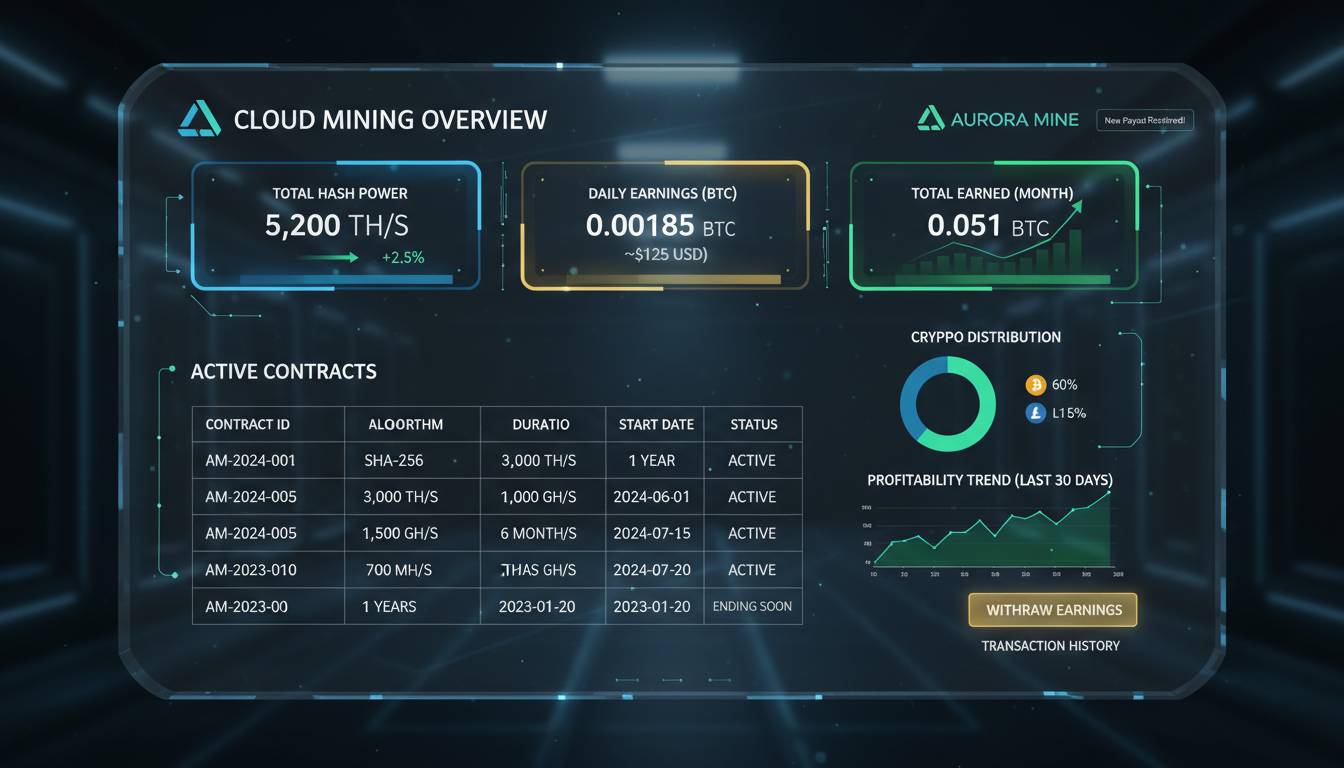
Cloud mining has become one of the most common ways people try to get into cryptocurrency mining without dealing with the headaches of running physical hardware. As digital currencies have gone more mainstream, more folks are curious about how cloud mining actually works, whether it makes money, and which companies are worth trusting. This guide walks through the cloud mining landscape, compares the main players, and gives you what you need to make a call.
What is Cloud Mining?
Cloud mining is basically renting computing power from remote data centers to mine cryptocurrencies like Bitcoin, Ethereum, or Litecoin. Instead of dropping thousands of dollars on mining rigs, dealing with噪音, electricity bills, and hardware that breaks, you buy a contract that gives you a slice of the hash rate those machines generate. The mining farm handles all the technical stuff—the cooling, the maintenance, the electricity—while you get paid out based on how much hash rate you rented.
The appeal is obvious: you can get started with a few hundred dollars instead of tens of thousands. You don’t need to know anything about ASICs or GPU configs. It’s genuinely passive. That said, “passive” doesn’t mean “profitable”—more on that later.
How Does Cloud Mining Work
Here’s what actually happens when you buy into a cloud mining contract. You pick a provider, choose how much hash rate you want to rent, and pay upfront for a set period—usually one to three years. The provider takes that money and uses it to cover their hardware, electricity, and facility costs.
Your share of rewards gets paid out daily, weekly, or monthly, depending on the provider. They’ll deduct maintenance fees first (more on those), and whatever’s left is yours—usually paid in the cryptocurrency you mined, though some providers let you take USD equivalents.
One thing that trips people up: mining difficulty matters a lot. As more miners join a network, the math gets harder, meaning your rented hash rate produces fewer coins over time. This is why long-term cloud mining contracts are such a gamble—you’re locking in returns while difficulty keeps climbing.
Types of Cloud Mining Contracts
Providers generally offer three main types of contracts. Knowing the differences helps you pick something that matches your risk tolerance.
Hashrate rental contracts are the most common. You pay for a specific amount of hash rate for a fixed term, typically one to five years. Maintenance fees come out of your daily earnings. Simple enough, but read the fine print—those fees add up.
Lifetime contracts sound better than they are. They last “as long as mining remains profitable,” which means the provider can cancel them whenever the math stops working. Nice for avoiding expiration dates, but the get-out clause works both ways.
Investment packages throw in extras like referral bonuses, trading discounts, or bonus hashrate. These vary a lot between providers and are often just ways to make standard contracts look more attractive.
Is Cloud Mining Profitable in 2025
Here’s the honest answer: it depends, and the odds aren’t great for most people.
Your returns hinge on crypto prices, network difficulty, contract terms, maintenance fees, and how much you put in upfront. Crypto prices have been volatile—you don’t need me to tell you that—and when prices spike, more miners jump in, difficulty goes up, and margins shrink. It’s a feedback loop that works against anyone buying in at a fixed price.
Maintenance fees are the thing nobody talks about. Providers typically take 5% to 20% of your rewards for electricity, cooling, and hardware upkeep. When crypto prices tank or difficulty spikes, those fees can eat up everything you earn and then some. Plenty of people have ended up with contracts that lost money the whole time.
The early days of cloud mining—back when Bitcoin was worth hundreds instead of tens of thousands—were much easier money. These days, the competition is fierce, and the economics favor the big players with cheap electricity. If you’re going into cloud mining expecting steady passive income, you’d better lower your expectations significantly.
Top Cloud Mining Platforms Compared
The industry shrank a lot after the 2022 crypto crash. Some major players disappeared entirely. Here’s how the survivors stack up.
Genesis Mining has been around since 2013, making it one of the oldest in the business. They offer Bitcoin, Ethereum Classic, and a few other coins, with pricing that gets better if you buy in bulk. People generally like their transparency and support, though their prices aren’t as competitive as they used to be.
BitDegree is different—it’s mainly an educational platform that added cloud mining on the side. If you’re new to crypto and want to learn while you invest, that’s the draw. It’s a niche angle, but not necessarily better than going with a dedicated miner.
Hashing24 focuses only on Bitcoin. They own their hardware outright and operate in Georgia and Iceland, where electricity is cheap. Their pitch is transparency—you can see what you’re paying for without middlemen. The contracts are shorter than some competitors, usually one to two years.
NiceHash isn’t traditional cloud mining. It’s a marketplace where you can rent hash power for different algorithms. It’s more flexible if you want to experiment, but it’s also more hands-on than buying a set-it-and-forget-it contract.
| Provider | Founded | Primary Cryptos | Contract Length | Notable Feature |
|---|---|---|---|---|
| Genesis Mining | 2013 | BTC, ETC, XEM | 1-5 years | Longest-running |
| BitDegree | 2015 | BTC, ETH | 1-3 years | Learning platform |
| Hashing24 | 2016 | BTC only | 1-2 years | Owns hardware |
| NiceHash | 2014 | Multiple | Flexible | Marketplace model |
Cloud Mining Risks and Common Scams
Let’s be real: this industry has attracted more than its share of crooks. Plenty of legit providers exist, but the scams are persistent enough that you need to know what to watch for.
Ponzi schemes are the worst. These operators advertise guaranteed returns, pay early investors with money from new recruits, and eventually collapse when recruitment slows. If you see “guaranteed daily returns” or aggressive referral programs offering crazy commissions, run. Real mining doesn’t work that way.
Exaggerated hashrate is common even among semi-legit providers. They’ll claim to have more machines than they actually do, collect contract fees, and deliver less than promised. Reputable companies get third-party audits—look for that.
Hidden fees sneak up on people. Providers advertise low base prices, then bury maintenance costs in terms of service that nobody reads. By the time you notice, your returns are underwater.
Exit scams are exactly what they sound like—operators take the money and vanish. Check company registration, read user forums, and verify they’re actually running mining operations before you trust them with cash.
How to Choose a Reliable Cloud Mining Provider
Due diligence matters here. Here’s what to look for.
Transparency is huge. Reputable providers publish facility addresses, show real-time hash rate dashboards, and clearly explain their fee structure. If you can’t verify what you’re paying for, don’t pay.
Track record matters. Companies that have survived multiple crypto cycles are generally safer bets than startups with no history. Look for consistent user reviews on independent forums, not just testimonials on the provider’s own site.
Third-party audits add credibility. Several legit providers get regular audits from accounting firms that confirm their hardware and hash rate claims. This isn’t universal, but it’s a good sign when you see it.
Customer support tells you a lot. Test their response time before committing money. If you can’t get a straight answer now, imagine what happens when you have a problem.
Contract flexibility is worth considering. Some providers let you start with short terms or trial periods. It’s a safer way to test whether the returns actually show up before going big.
Cloud Mining vs. Traditional Mining Rigs
If you’re weighing cloud mining against building your own rig, here are the real tradeoffs.
DIY mining means full control. You own the hardware, you choose what to mine, and you can sell everything if things go south. But the upfront cost is steep—proper Bitcoin mining rigs run thousands each, and that’s before electricity, cooling, and a suitable space. Residential noise and heat are real problems. And when your cards die, you’re on the hook for replacements.
Cloud mining is the opposite. No noise, no hardware to maintain, no electricity bills. But you’re paying a premium for that convenience. The provider needs to make a profit, which means your returns will always be less than if you’d bought the same hash rate in your own machines. You’re also trusting them to run an honest operation, which brings us back to the due diligence point.
Most individual investors are probably better off with a small cloud mining position alongside other crypto holdings rather than going all in on either approach. If you’ve got technical skills and serious capital, DIY mining can be more profitable. If you just want exposure without the hassle, cloud mining fills that slot—just don’t expect miracles.
Conclusion
Cloud mining isn’t a scam in itself, but it’s not the easy money some promoters make it out to be. The industry has gotten more competitive, the margins are thinner, and the scams are still out there. That said, if you do your homework—pick a provider with a real track record, understand exactly what fees you’re paying, and go in with realistic expectations—you can potentially make it work as part of a broader crypto strategy.
The key is treating it like a long-term investment, not a get-rich-quick thing. And never put in more than you can afford to lose. Crypto is volatile enough on its own; cloud mining adds another layer of uncertainty on top.
Frequently Asked Questions
Is cloud mining profitable?
It can be, but the odds aren’t great. Returns depend on crypto prices, mining difficulty, and what you’re paying in fees. Many contracts never earn back their upfront cost. If you go in expecting 5-20% annual returns, you’ll probably be disappointed.
How does cloud mining work?
You rent hash rate from a provider’s remote data center. They handle the hardware and electricity; you get a share of the mined coins minus fees. It’s that simple—and that complicated.
What is the best cloud mining service?
Depends on what you need. Genesis Mining and Hashing24 are the most established. BitDegree is good if you want to learn while you mine. NiceHash is better if you want flexibility. There’s no single best—do the research.
Is cloud mining a scam?
No, it’s a legitimate business model. But the industry has plenty of scams mixed in with the real operators. The distinction comes down to transparency, verified operations, and company history.
How much can you earn from cloud mining?
No honest answer here—you’ll find calculators that promise 5-20% annually, but actual results vary wildly. Significant profits require significant capital and favorable timing. Most people lose money.
What are the main risks?
Crypto price drops, rising difficulty, hidden fees, provider bankruptcy, and outright fraud. There’s also no real regulatory protection—if something goes wrong, you’re probably out of luck.