
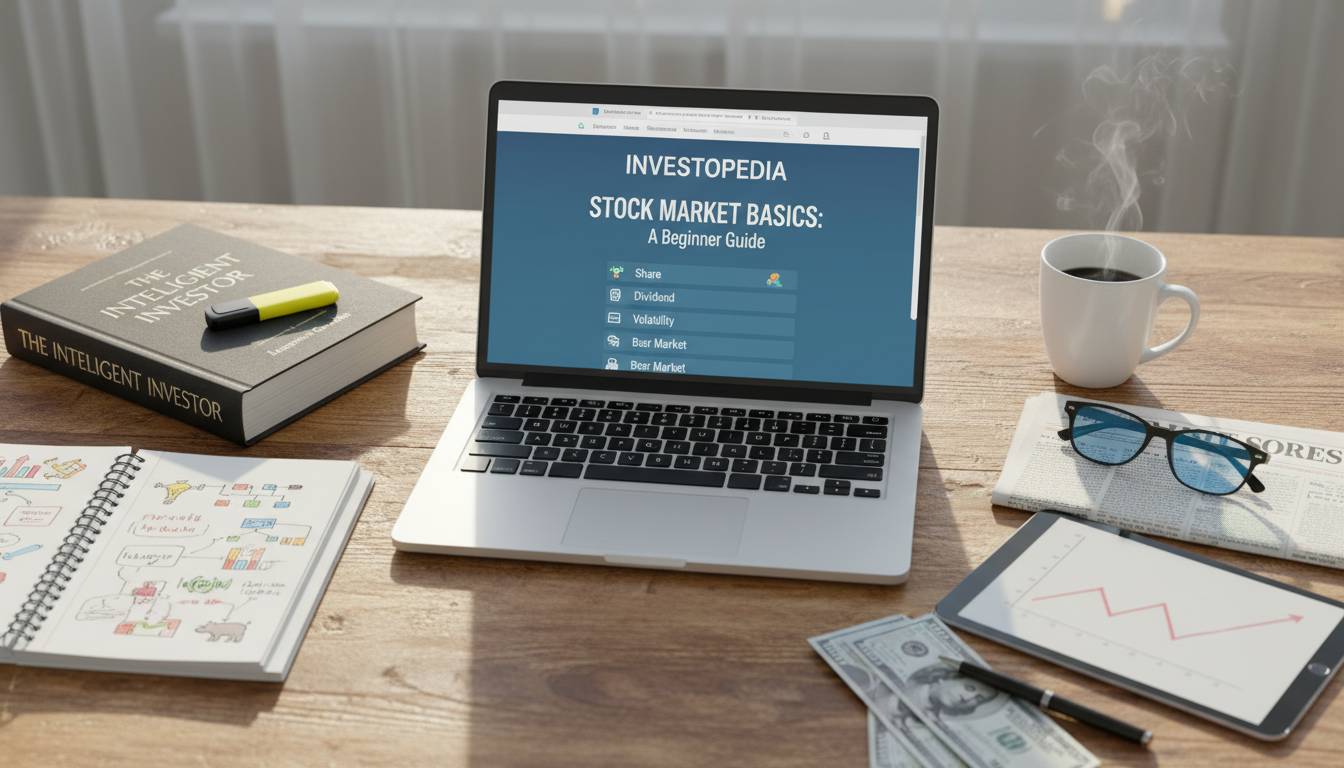
The stock market is one of the most reliable ways to build wealth over time, but if you’re new to investing, it can feel intimidating. This guide walks you through everything you need to know to get started, from understanding what stocks are to placing your first trade and building a portfolio that matches your goals.
Understanding Stocks: What They Are and How They Work
A stock is simply a share of ownership in a company. When you buy stock, you own a small piece of that business and have a claim to part of its assets and earnings. If the company does well, your shares become more valuable. If it does poorly, they could lose money.
Stocks trade on exchanges like the New York Stock Exchange and Nasdaq. Buyers and sellers set prices based on supply and demand. Stock prices change throughout each trading day based on company performance, economic conditions, and how investors feel about the future.
Here’s something reassuring: the stock market has historically returned about 7-10% per year after inflation. That’s not a guarantee, but over decades, it adds up. The key is staying invested for the long haul and not panic-selling when prices drop.
How Much Money Do You Need to Start Investing
You don’t need much money to start. Most online brokerages let you open an account with zero dollars. You can begin with $10, $50, or whatever amount feels comfortable.
Many brokers also offer fractional shares, meaning you can buy a piece of a stock like Amazon or Google without paying the full share price. This has made investing accessible to millions of people who previously felt locked out.
A good rule: invest money you won’t need for at least three to five years. If you might need the cash soon, keep it in savings. Many beginners start by investing a fixed amount each month through dollar-cost averaging—say, $100 every month—regardless of whether prices are up or down. This removes the stress of trying to pick the perfect moment to buy.
Step-by-Step Guide to Investing in Stocks
Step 1: Define Your Investment Goals. What are you saving for? Retirement? A house? Something else? Your goals determine your timeline and how much risk makes sense for you.
Step 2: Assess Your Risk Tolerance. How much market volatility can you handle? If you’re young and investing for retirement decades away, you can afford more risk. If you’re five years from buying a house, be more conservative.
Step 3: Open a Brokerage Account. Choose an online brokerage. Fidelity, Charles Schwab, Vanguard, and Robinhood are popular options. Consider fees, ease of use, and available research tools.
Step 4: Fund Your Account. Transfer money from your bank. Electronic transfers typically take one to three business days.
Step 5: Research Before Buying. Don’t just pick a stock because someone mentioned it online. Look at the company’s financials, how it makes money, and what advantages it has over competitors.
Step 6: Place Your Order. You can use a market order (buy now at the current price) or a limit order (only buy if the price drops to your target). Market orders execute immediately; limit orders give you price control but might not fill.
Step 7: Monitor and Adjust. Check your portfolio periodically—quarterly is fine, not daily. Rebalance if your allocation drifts too far from your original plan. Stay informed about your holdings, but don’t overreact to short-term news.
Best Brokerage Accounts for Beginners
The right brokerage makes a difference, especially when you’re learning.
Fidelity offers zero-commission trades, solid research tools, and a user-friendly app. Their customer service is accessible by phone around the clock, which matters when you have questions.
Charles Schwab provides commission-free trading and a large branch network if you prefer in-person help. Their platform works well for beginners and grows with you as you get more experienced.
Vanguard is known for low-cost index funds and ETFs. If you’re interested in passive investing—buying and holding for the long term—Vanguard is a natural fit.
Robinhood became popular for its simple mobile interface and commission-free trades. It’s easy to use, though it has had some regulatory issues and service outages.
Common Beginner Mistakes to Avoid
Timing the market. Trying to buy low and sell high rarely works. Even professionals struggle to predict short-term movements. Historically, staying invested beats trying to time the market.
Ignoring diversification. Putting all your money in one stock or one industry is risky. If that company or sector struggles, your whole portfolio suffers. Spread your money across different sectors and asset types.
Investing money you need soon. If you’re saving for a down payment or emergency fund, don’t put that money in stocks. The market can drop significantly in a short period, and you don’t want to be forced to sell at a loss.
Ignoring fees. Most brokers eliminated trading commissions, but other fees exist—expense ratios on funds, account fees, withdrawal penalties. Read the fine print.
Building Your First Portfolio
You have two main approaches: individual stocks or exchange-traded funds.
Individual stocks let you pick specific companies, but they require more research and monitoring. Your success depends on choosing winners.
ETFs and index funds give you instant diversification by holding hundreds or thousands of stocks. Buying an S&P 500 ETF means owning a slice of 500 major companies. This is less risky than picking individual stocks and works well for beginners.
A common strategy: start with diversified funds and add individual stocks gradually as you learn more.
Dollar-cost averaging works well for building a portfolio over time. Invest a fixed amount regularly, and you’ll automatically buy more shares when prices are low and fewer when they’re high.
Frequently Asked Questions
How much should I invest as a beginner?
Start with whatever doesn’t stress you if it temporarily loses value. Many experts recommend $50 to $100 monthly. Consistency matters more than the amount.
Is it safe to invest in stocks?
All investing carries risk. Stocks can go down, sometimes significantly. But over long periods, they’ve generally gone up. Your safety depends on diversification, a long-term outlook, and investing money you won’t need soon.
Can I lose all my money in stocks?
A company can go bankrupt and its stock can become worthless, but this is rare with diversified portfolios. Even in crashes like 2008 and 2020, markets eventually recovered.
What is the difference between stocks and ETFs?
A stock is ownership in one company. An ETF is a basket that holds many stocks (or bonds). ETFs give you diversification with a single purchase.
How long should I hold onto stocks?
There’s no rule, but stock investing works best as a long-term strategy. Short-term trading tends to underperform patient, long-term holding.
Do I need to pay taxes on stock gains?
Yes, profits are generally taxable. But you only owe taxes when you sell. Holding stocks in a tax-advantaged account like an IRA delays or eliminates these taxes.
Conclusion
Investing in stocks has never been easier to get started with. You can open an account today with very little money and begin building wealth for the future. The hardest part is often just starting.
Remember: time in the market beats timing the market. The sooner you begin, the more you benefit from compound growth over the years ahead.