
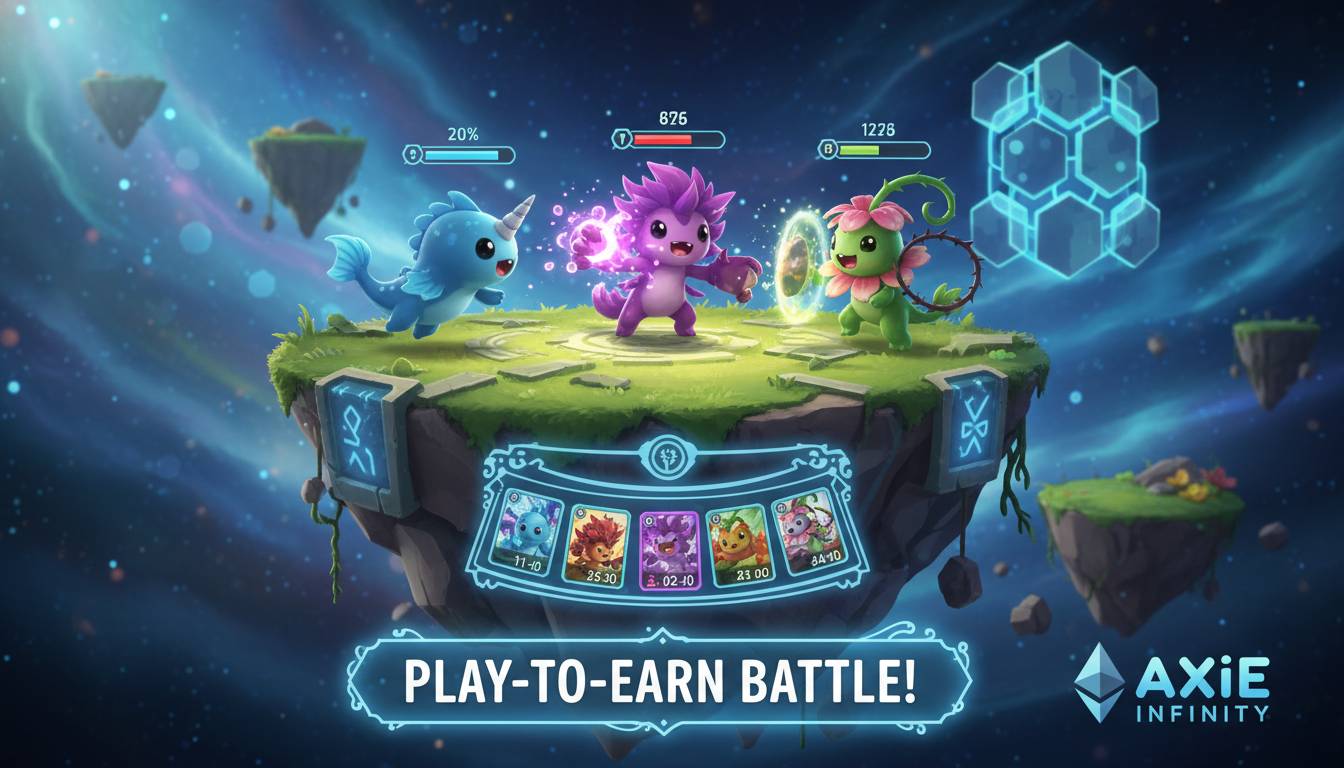
Blockchain gaming represents a revolutionary intersection of cryptocurrency technology and interactive entertainment, transforming how players engage with digital worlds. Unlike traditional games where in-game purchases retain value only within closed ecosystems, blockchain games enable true ownership of digital assets through non-fungible tokens (NFTs). The play-to-earn (P2E) model has attracted millions of players globally, with the GameFi sector reaching a market capitalization of over $30 billion at its peak in late 2021. This comprehensive guide explores how blockchain gaming works, which games actually pay real money, and strategies to maximize your earnings while avoiding common pitfalls.
📊 STATS
• The global blockchain gaming market reached $4.6 billion in 2023
• Axie Infinity recorded $1.3 billion in lifetime NFT sales
• Over 2.8 million daily active users engaged with blockchain games in 2023
• The average play-to-earner in the Philippines earned 50-80% more than minimum wage
• Blockchain gaming accounts for 52% of all blockchain transaction volume
Key Takeaways
• True Asset Ownership: Players own in-game items as NFTs they can sell on marketplaces
• Real Monetary Value: Cryptocurrencies earned through gameplay can be converted to fiat
• Multiple Income Streams: Games offer rewards through gameplay, staking, and trading
• Sustainability Concerns: Many P2E models face economic challenges requiring careful evaluation
• Entry Barriers: Initial investment in NFTs or cryptocurrencies is often required
What Is Blockchain Gaming?
Blockchain gaming integrates distributed ledger technology into video game ecosystems, fundamentally changing how players interact with virtual economies. At its core, blockchain gaming uses smart contracts to verify ownership of in-game assets, enable peer-to-peer trading, and distribute value directly to players rather than centralizing profits with game developers.
The play-to-earn model distinguishes blockchain gaming from traditional gaming. In conventional games, players spend countless hours grinding for rewards that hold no external value—once players stop playing, their time investment becomes worthless. Blockchain games reverse this equation by awarding cryptocurrencies or NFTs that retain value outside the game environment. Players can sell their earned assets on blockchain marketplaces, converting gaming time into actual income.
Three technological pillars support blockchain gaming: non-fungible tokens representing unique in-game items, cryptocurrencies functioning as in-game currencies, and smart contracts automating reward distribution and asset transfers. Games built on various blockchains—Ethereum, Polygon, Solana, and BNB Chain—each offer different cost structures, transaction speeds, and gaming experiences.
Core Components
Elements:
• NFTs (Non-Fungible Tokens): Unique digital assets representing characters, weapons, land, or cosmetics that players truly own
• In-Game Tokens: Cryptocurrencies earned through gameplay that often grant governance rights
• Smart Contracts: Self-executing code managing asset transfers, reward distribution, and game logic
• Web3 Wallets: Digital wallets like MetaMask connecting players to blockchain games
💡 STAT: 78% of blockchain gamers cite “earning real money” as their primary motivation, compared to 34% who prioritize entertainment
How the Economy Functions
Play-to-earn economies operate on a simple premise: value enters the system through new players purchasing NFTs or tokens, and that value distributes to existing players who earn rewards through gameplay. This creates a sustainable loop only when new participant growth exceeds reward payouts. The economic viability depends heavily on tokenomics—the design of how tokens are minted, distributed, and burned (removed from circulation).
Successful blockchain games implement deflationary mechanisms: token burns during transactions, staking requirements, and limited supply caps. Games like Axie Infinity initially attracted criticism when token values crashed, demonstrating the volatility inherent in play-to-earn economics. Understanding tokenomics before investing significant time or money becomes essential for anyone entering the blockchain gaming space.
Benefits of Play-to-Earn Gaming
The blockchain gaming revolution offers compelling advantages over traditional gaming models, though players should approach with realistic expectations about both potential earnings and risks.
| Benefit | Impact | Source |
|---|---|---|
| True Asset Ownership | 100% player control over in-game items | CoinDesk, 2023 |
| Passive Income Potential | Staking and NFT rentals generate returns | Messari, 2024 |
| Cross-Game Utility | Some NFTs function across multiple games | Decrypt, 2023 |
| Transparent Rewards | Blockchain verification eliminates manipulation | Ethereum Foundation, 2024 |
| Global Accessibility | Anyone with internet access can participate | World Bank, 2024 |
Key Advantages
Top Benefits:
• Financial Agency: Players control their earnings without requiring bank accounts in traditional systems
• Secondary Markets: Unlike traditional games, rare items appreciate based on actual scarcity
• Community Ownership: Many games distribute governance tokens letting players influence development
• Low Barrier to Entry: Free-to-play models on platforms like Polygon allow testing without investment
• Skill-Based Earnings: High-skill players can earn more than casual participants, unlike lottery-style reward systems
📈 CASE: The Yield Guild Games scholarship program enabled players in developing nations to earn through gaming, with top players generating $1,000-$3,000 monthly during Axie Infinity’s peak
The scholarship model deserves particular attention. Established players—often called “managers”—lend their NFT assets to new players who cannot afford initial investments. Scholars play the game using lent assets, and earnings split between scholar and manager. This system democratized access, allowing participants without capital to enter the P2E economy. However, scholarship opportunities have diminished as token values decreased across the industry.
Comparing Top Blockchain Games
| Factor | Axie Infinity | Gods Unchained | StepN | Illuvium |
|---|---|---|---|---|
| Blockchain | Ronin/Ethereum | Immutable X | Solana | Ethereum |
| Entry Cost | 💰 $100-500+ | 💰 Free | 💰💰 $200+ | 💰💰 $50+ |
| Genre | Turn-based Battle | Trading Card | Move-to-Earn | Auto-Battler |
| Daily Potential | $1-50+ | $0.50-10 | $5-30 | $1-20 |
| Rating | ⭐⭐⭐ | ⭐⭐⭐⭐ | ⭐⭐⭐ | ⭐⭐⭐⭐ |
Axie Infinity
✅ Pros: Established player base, scholarship programs, diverse gameplay, strong community
❌ Cons: High entry cost, token volatility, complex economy, declined user base since 2022
💰 Price: Axies (characters) range from $30 to $5,000+ depending on rarity
🎯 For: Players seeking established ecosystems with earning potential through trading and gameplay
Axie Infinity pioneered the play-to-earn movement, generating over $1 billion in NFT sales. Players collect Axies—creatures with distinct attributes—battling them in turn-based matches to earn Smooth Love Potion (SLP) tokens. The game requires at least three Axies to play, creating significant entry barriers. While Axie remains the most recognized blockchain game, its economy faced substantial challenges, with SLP tokens losing over 95% of their value from peak .
Gods Unchained
✅ Pros: Free-to-play entry, skill-based rewards, legitimate trading card mechanics, Immutable X Layer 2
❌ Cons: Lower earning potential, competitive meta requires collection investment
💰 Price: Cards trade from $0.10 to hundreds of dollars; core deck playable for free
🎯 For: Traditional card game enthusiasts wanting Web3 integration without upfront costs
Gods Unchained offers perhaps the lowest barrier to entry among legitimate P2E games. Players earn Flux and GODS tokens through competitive play, with free cards allowing competitive decks without spending money. The game runs on Immutable X, providing gas-free transactions—a significant advantage over Ethereum-based alternatives.
StepN
✅ Pros: Real-world utility, fitness motivation, established brand
❌ Cons: High sneaker costs ($100-1,000+), GST token depreciation, requires active movement
💰 Price: Virtual sneakers range from $100 to $3,000 depending on level and attributes
🎯 For: Fitness enthusiasts seeking monetary motivation for physical activity
StepN pioneered move-to-earn, rewarding players for walking, jogging, or running with GMT tokens. The game achieved rapid growth in early 2022 before facing the same tokenomics challenges affecting the broader P2E sector. Players must weigh GPS verification requirements and sneaker maintenance against earning potential.
Illuvium
✅ Pros: AAA-quality graphics, diverse gameplay modes, built on Ethereum, collectible focus
❌ Cons: High system requirements, still in development, complex token ecosystem
💰 Price: ILV tokens and in-game NFT creatures
🎯 For: Players prioritizing gaming quality over earning potential
Illuvium represents the “triple-A” approach to blockchain gaming—focusing on production values matching mainstream games while integrating Web3 elements. The auto-battler RPG features captured creatures (Illuvials) as NFTs with varying rarities. While earning potential exists through gameplay and trading, Illuvium positions itself more as a legitimate game with blockchain features rather than primarily an earning platform.
How to Start Playing Blockchain Games
Prerequisites:
– [ ] Web3 wallet (MetaMask recommended)
– [ ] Cryptocurrency exchange account (Coinbase, Binance)
– [ ] Research on target game tokenomics
– [ ] Understanding of NFT marketplace mechanics
– [ ] Risk capital you can afford to lose
Time: 1-3 hours initial setup | Cost: $0-$500+ depending on game
Steps
1. Set Up Your Web3 Wallet
Download MetaMask as a browser extension or mobile app. Create a secure wallet and save your seed phrase—12 words acting as your master password. Never share this phrase; anyone with it controls your assets. Fund your wallet with small amounts of the required blockchain’s native token (ETH for Ethereum, SOL for Solana) for transaction fees.
⏱ Time: 15-30 minutes | 💡 Tip: Enable two-factor authentication on associated email and exchange accounts
2. Acquire Game Tokens
Purchase the specific cryptocurrency required for your chosen game. For Axie Infinity, you need ETH on Ronin network. For StepN, you’ll need SOL. Always verify you’re sending tokens to the correct blockchain—transactions to wrong networks result in permanent loss.
⚠️ Avoid: Sending tokens to centralized exchange addresses not matching your game’s network → Fix: Always test with small amounts first
3. Purchase Entry NFTs or Connect Wallet
Visit the official game marketplace to acquire necessary NFTs—characters, cards, land, or other assets. Alternatively, some games connect directly through wallet integration without initial purchases. Verify you’re on the official marketplace—scam sites frequently replicate legitimate game interfaces.
4. Learn the Economy
Before investing significant time, understand how tokens earn, their current values, and historical volatility. Join official Discord servers and community discussions. Many successful players spend weeks researching before committing capital.
5. Start Playing
Begin with small investments or free-to-play options. Track earnings meticulously. Calculate your actual hourly rate considering time invested. Many players discover earnings fall far below minimum wage once all factors account.
Troubleshooting:
| Problem | Fix |
|———|—–|
| Transaction failed | Increase gas fee or wait for network congestion to clear |
| Wallet not connecting | Clear browser cache, ensure browser extension updated |
| NFT not appearing | Add custom token address to wallet or switch networks |
| Lost assets | Contact game support; blockchain transactions cannot be reversed |
Common Blockchain Gaming Mistakes
| Mistake | Impact | Solution |
|---|---|---|
| Investing Life Savings | 📉 Total loss risk 90%+ | Never invest more than 10% of disposable income |
| Ignoring Tokenomics | 📉 Earned tokens become worthless | Research supply, burns, inflation before playing |
| Fearing Missing Out | 📉 Buying peaks | Wait for correction; no game is “must-buy-now” |
| Neglecting Security | 📉 Hacked wallets lose everything | Use hardware wallet for large holdings |
| Confusing Fun with Income | 📉 Burnout, disappointment | Play games you’d enjoy even without earning |
⚠️ CRITICAL: The majority of play-to-earn games have proven economically unsustainable. Axie Infinity, the largest P2E success, saw token values collapse over 95%. Many players who invested hundreds or thousands in NFT assets lost most or all value. Only投入 money you can entirely afford to lose.
Prevent:
1. Never purchase NFTs with money needed for necessities
2. Treat gaming earnings as windfall, not guaranteed income
3. Withdraw profits immediately rather than reinvesting game tokens
4. Diversify across multiple games rather than concentrating in one
Expert Insights
👤 Miko Matsumura, General Partner at gumi Cryptos Capital
“The play-to-earn model is fundamentally flawed when the only value creation comes from new players joining. Sustainable blockchain gaming requires value creation through actual utility—not just speculation. The winners will be games people play for fun, with earning as a secondary benefit.”
Data: His fund has invested in 50+ Web3 gaming companies | Advice: Focus on games you’d enjoy regardless of earnings
👤 Jin Wu, Analyst at Messari
“Blockchain gaming transaction volume has remained resilient despite market downturns because the underlying technology genuinely solves player pain points around asset ownership. We’re seeing institutional interest in game assets as a new asset class.”
Data: GameFi represents 35% of blockchain utility usage | Advice: Evaluate games based on gameplay quality, not just earning potential
📊 BENCHMARKS
| Metric | Average | Top 10% |
|——–|———|———|
| Hours to break even on $100 investment | 200+ | 40-80 |
| Monthly earnings (casual play) | $5-20 | $50-200 |
| NFT appreciation (12-month) | -70% | Variable |
| Player retention (6-month) | 15% | 35%+ |
Recommended Tools and Platforms
| Tool | Cost | For | Rating |
|---|---|---|---|
| MetaMask | Free | Wallet management | ⭐⭐⭐⭐⭐ |
| CoinGecko | Free | Token price tracking | ⭐⭐⭐⭐⭐ |
| DappRadar | Free | Game analytics | ⭐⭐⭐⭐ |
| Immutable X | Free | Low-fee transactions | ⭐⭐⭐⭐ |
| Step Finance | Free | Portfolio tracking | ⭐⭐⭐ |
Top Picks:
• MetaMask: Industry-standard wallet supporting 1,000+ blockchains; essential for any blockchain gaming
• CoinGecko: Comprehensive token pricing with historical charts; crucial for evaluating earning potential
• DappRadar: Real-time game user statistics and transaction volumes for informed game selection
Conclusion
Blockchain gaming has evolved from a speculative craze into a legitimate sector combining entertainment with potential financial rewards. The technology genuinely enables true ownership of in-game assets—something traditional gaming has never offered. However, the play-to-earn model faces significant sustainability challenges, with most early P2E games proving economically unviable over extended periods.
Success in blockchain gaming requires treating it as a high-risk investment category: research extensively, invest only disposable income, prioritize games you actually enjoy playing, and withdraw earnings rather than reinvesting into the game’s ecosystem. The most promising developments involve “free-to-play with earn options” rather than requiring upfront investment, reducing barriers while maintaining earning opportunities for dedicated players.
The future likely belongs to blockchain games where earning enhances rather than defines the experience—games players enjoy primarily for entertainment, with cryptocurrency rewards providing supplemental value rather than primary motivation. Approach blockchain gaming with cautious optimism, understanding both its revolutionary potential and its substantial risks.
Frequently Asked Questions
How much money can you actually make playing blockchain games?
Earnings vary dramatically based on game choice, time investment, skill level, and initial capital. Most casual players earn $5-20 monthly after accounting for time spent. Top players with significant NFT investments and competitive skills have earned $500-3,000+ monthly during optimal market conditions, but these cases represent less than 5% of players. The majority of P2E participants earn less than minimum wage when time is valued at standard hourly rates.
Are blockchain games safe to play?
Blockchain games carry multiple risk categories: financial risk (token value collapse), security risk (scams, phishing, wallet hacks), and technical risk (smart contract bugs). Legitimate games from established developers pose lower financial and security risks, but no blockchain game guarantees safety. Use hardware wallets for significant holdings, verify all URLs, never share seed phrases, and connect only to official game platforms.
Do I need to buy NFTs to start playing?
Some blockchain games offer free-to-play options—Gods Unchained and certain Axie Infinity scholarship programs allow participation without initial investment. However, most legitimate P2E games require purchasing entry NFTs or tokens. Budget $50-500+ for initial entry depending on your chosen game. Be extremely skeptical of any game claiming “free entry with no investment”—these are often scams.
Which blockchain is best for gaming?
Polygon and Immutable X offer the best balance of low transaction costs and security for Ethereum-based gaming. Solana provides fast, inexpensive transactions but has experienced multiple network outages. Ronin specializes in gaming with Axie Infinity. The “best” chain depends on your specific game choice—always evaluate games rather than chains in isolation.
Can you lose money playing blockchain games?
Yes, you can lose significant money through token depreciation, NFT value loss, and scams. The blockchain gaming sector experienced massive crashes in 2022, with many tokens losing 90%+ value. Unlike traditional investments, blockchain assets offer no regulatory protection. Many players who invested in Axie Infinity, StepN, and other popular P2E games lost substantial portions of their investment. Only invest capital you can afford to lose entirely.