
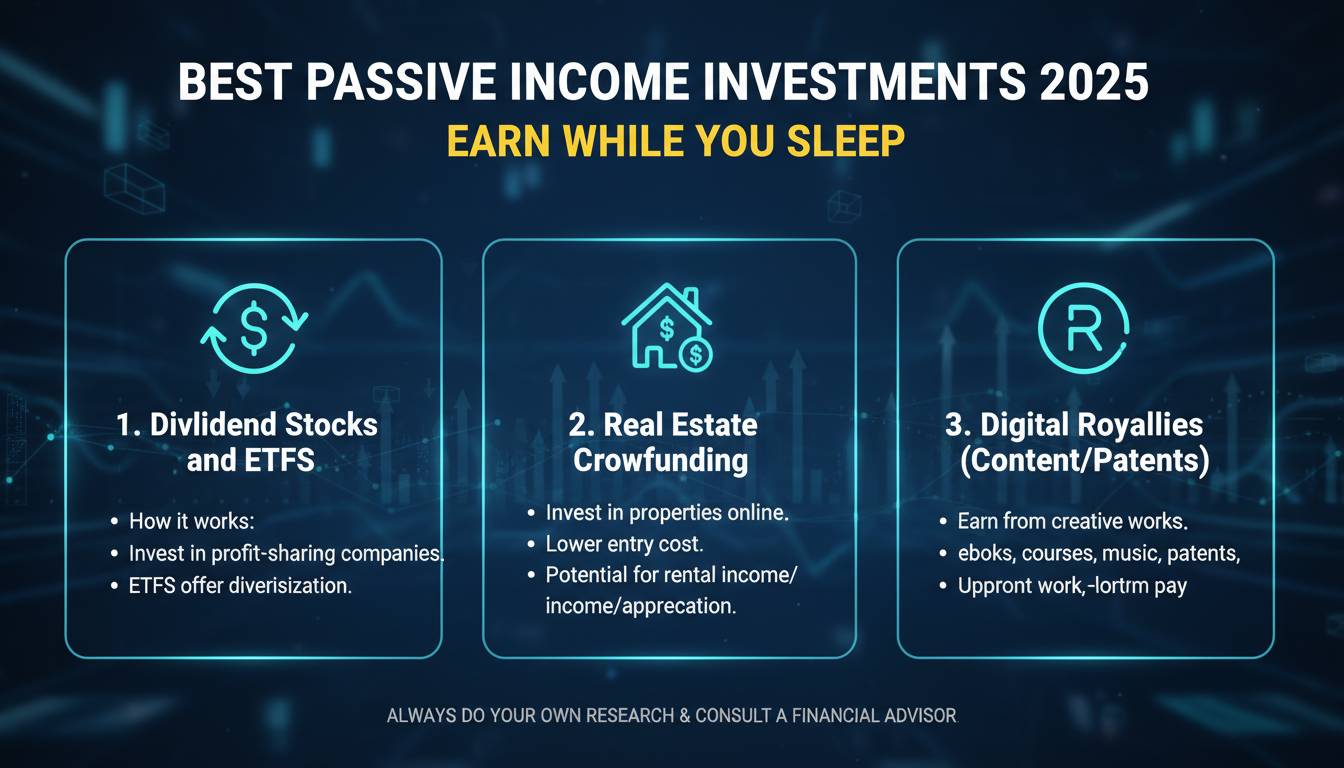
The passive income landscape shifted noticeably in 2025. Interest rates stabilized, which changed the calculus on some classic strategies. This guide walks through the investment options that actually make sense now—not the ones that sound good in theory but underperform in practice.
What Makes a Passive Income Investment Worth Your Money
Let’s be honest: not every “passive income” opportunity is worth your time. Some require way more hands-on work than the marketing suggests. Others lock up your money with no clear way out.
A solid passive income investment should tick three boxes. First, you set it up once and then it runs itself—with real minimal maintenance. Second, it pays you consistently, not just when stars align. Third, you can get your money out without jumping through hoops, though some investments legitimately require longer time horizons.
Your risk tolerance matters enormously here. If you lose sleep over market swings, bonds and high-yield savings will serve you better than dividend stocks or rental properties. There’s no shame in preferring safety over maximum returns—stress-induced insomnia isn’t worth an extra percentage point.
The cash you need to start varies wildly. You can open a high-yield savings account with a pizza’s worth of money. Buying a rental property? You’ll need a serious down payment and then some.
Dividend Stocks
Dividend stocks are the bread and butter of passive income investing. Companies pay you directly from their profits—usually every quarter—just for owning shares. You’re not flipping coins or timing markets. You’re collecting checks while the companies you own keep growing.
The yield tells you what you’re earning as a percentage of the stock price. In early 2025, solid dividend payers in utilities, consumer goods, and banking hovered around 3-5%. Some funds push higher, but anything too good to be true usually is.
The S&P 500 Dividend Aristocrats are worth knowing—companies that raised dividends for at least 25 years straight. These aren’t exciting, but they are reliable. When the market wobbles, these keep paying.
You can buy individual stocks or stick with ETFs for instant diversification. Most brokerages now charge zero commission, so there’s no excuse not to start.
Here’s the thing most people miss: reinvest your dividends. Buying more shares with those quarterly payments compounds like crazy over time. Twenty years of this transforms modest starting amounts into something worth having.
Real Estate Investment Trusts (REITs)
REITs let you invest in real estate without dealing with toilets, tenants, or Texas landlords. These companies own buildings—apartments, offices, shopping centers, data centers—and must pay out at least 90% of profits as dividends.
The big wins: you don’t manage anything, and these trade like stocks, so you can sell whenever you want. Traditional real estate takes months to unload. REITs take seconds.
Different types serve different purposes. Healthcare REITs own hospitals and medical offices—stable tenants, predictable rents. Residential REITs own apartment buildings. Retail REITs own malls and shopping centers, though that’s gotten trickier with online shopping eating into brick-and-mortar.
VNQ (Vanguard Real Estate ETF) gives you broad exposure across sectors if you don’t want to pick winners. It’s not glamorous, but it works.
Rental Real Estate Properties
Owning rentals outright isn’t truly passive—you’ll deal with maintenance calls, vacancy gaps, and sometimes difficult tenants. But it offers something few investments do: a tangible asset you can touch, leverage with mortgages, and control directly.
Location matters more than anything else. A decent property in a growing city beats a “great deal” in a declining town every single time. Look for places with jobs, population growth, and rental demand. Otherwise, you’re fighting gravity.
The math needs to work. Rent minus mortgage, taxes, insurance, maintenance, and property management should leave you with positive cash flow. If it doesn’t, the deal is a loser—don’t rationalize your way into it.
Financing rental properties is tougher than buying a home. Expect higher down payments (usually 20%+) and higher interest rates. But you can still make the numbers work, especially if you’re willing to live in one unit and rent others (the classic house hack).
Crowdfunding platforms have opened this up to people who don’t have $50,000+ for a down payment. You can now invest in fractional shares of properties starting around $500. It’s not the same as owning outright, but it’s a valid starting point.
Bond Investments and Fixed-Income Securities
Bonds are the boring ballast in your portfolio—and you need some boring. They pay interest regularly and give you your principal back at maturity. When stocks tank, bonds often hold steady.
Treasury bonds are the safest option. Corporate bonds pay more because there’s some chance the company won’t pay you back. “Investment grade” means probably safe. “High-yield” (junk bonds) pay the most but carry real default risk.
Bond ladders are worth understanding. You buy bonds with different maturity dates—so some money becomes available every year or two. This protects you if rates change and gives you fresh cash to reinvest. It’s not exciting, but it’s smart.
Municipal bonds get a tax break. The interest usually escapes federal taxes and sometimes state taxes too. If you’re in a high tax bracket, this advantage can be substantial—sometimes more than the yield suggests.
High-Yield Savings and Money Market Accounts
These aren’t going to make you rich. But they’re safe, liquid, and pay way more than they did a few years ago. After Fed rate hikes, online banks now offer 4-5% on savings—nothing revolutionary, but a legitimate return with zero risk.
FDIC insurance protects up to $250,000 per account. You’re not losing money here unless the entire banking system collapses, in which case you have larger problems.
These work best for emergency funds, short-term parking, or money you’ll need soon. They won’t build wealth on their own, but they beat letting cash rot in a regular checking account.
Peer-to-Peer Lending Platforms
This is the riskier end of passive income. You lend money directly to borrowers through platforms like Prosper or LendingClub. They handle the paperwork; you pick who gets your money and earn the interest they would have paid a bank.
Returns run 5-10% annually, which sounds great until you factor in defaults. When the economy slows, borrowers stop paying. You’re taking real risk here.
The trick is diversification—lend small amounts across hundreds of loans so any single default doesn’t crush you. Some platforms let you sell loans early if you need cash, though you might take a discount.
This isn’t for everyone. If the idea of random strangers defaulting keeps you up at night, skip it. But if you want higher returns and can stomach some losses, it fills a niche.
Building a Diversified Passive Income Portfolio
Don’t put everything in one bucket. Mix stocks, bonds, real estate, and cash based on your age, risk tolerance, and goals. A 30-year-old loading up on bonds is being too cautious. A 60-year-old going all-in on speculative REITs is being reckless.
Tax-advantaged accounts (401ks, IRAs) should come first. You’re not paying taxes on growth you don’t realize yet. It’s free money—take it.
Consistency beats intensity. Putting $500 monthly into passive income investments for 20 years beats frantic trading and timing the market. Dollar-cost averaging isn’t sexy, but it works.
Conclusion
There’s no single “best” passive income investment—only what’s best for your situation. Dividend stocks and REITs offer growth plus income. Bonds provide safety. Rental real estate demands more work but offers tangible control. High-yield savings is boring but bulletproof. Peer-to-peer lending rewards risk-takers.
Pick what matches your temperament, start small, and stay the course. The real money in passive income comes from decades of compounding, not get-rich-quick schemes.
Frequently Asked Questions
What’s the easiest passive income investment for beginners?
High-yield savings or dividend ETFs. You can open an account today and own something tomorrow. No research required, no tenants to deal with. Start there, then branch out as you learn.
How much money do I need to start?
High-yield savings: $1. Dividend ETFs: the price of one share (often under $100). Rental properties: $20,000 to $50,000 minimum. Crowdfunding platforms: sometimes as low as $500.
Are passive income investments risky?
Everything carries some risk. FDIC accounts are nearly risk-free. Dividend stocks can drop 30% in a bad year. Rental properties can sit vacant. Peer-to-peer loans go unpaid. Diversification helps—but doesn’t eliminate risk.
How much can I actually earn?
High-yield savings: 4-5% currently. Dividend stocks: 3-5% yield plus appreciation. REITs: 4-5% historically. Rental properties: 5-10% cash returns in good markets. Peer-to-peer: 5-10% if you manage defaults well. Higher returns always mean higher risk.
How long until I see returns?
Savings: immediate. Dividends: first payment a few months after purchase. REITs: after first full quarter. Rental properties: typically 3-6 months to close and start renting. Patience is part of the game.
Real estate or dividend stocks?
Depends what you want. Real estate offers tax benefits, leverage, and something you can touch—but it’s more work. Stocks are liquid, diversified, and set-it-and-forget it—but volatile. Many people hold both.