
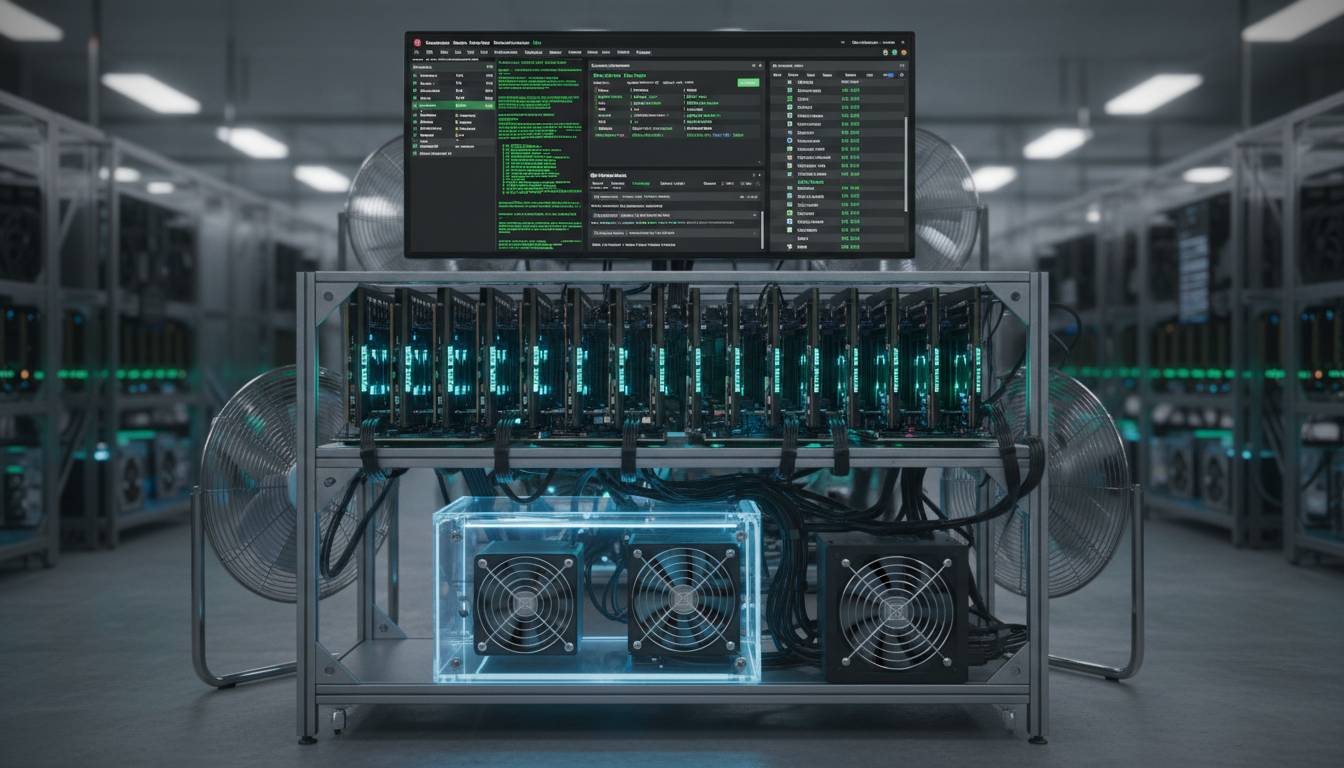
Cryptocurrency mining software sits between your hardware and the blockchain network, handling the work of connecting to pools, optimizing hash rates, and keeping your rig running. Whether you’re just starting out or running a rack of ASICs, picking the right software matters because even small efficiency differences add up over months of operation.
This guide covers the leading mining software options for 2025 and helps you figure out which one fits your setup.
Understanding Cryptocurrency Mining Software
Mining software tells your GPUs or ASICs what work to do and channels that computational power toward validating transactions on a blockchain. In return, you get cryptocurrency rewards. The software handles pool connections, temperature monitoring, overclocking, and worker management—all the operational details that keep a mining rig productive.
Without the right software, your hardware sits idle. Different programs support different algorithms and coins, and some are better suited to certain hardware configurations than others. The efficiency difference between software options can mean the difference between profit and loss, especially when electricity costs are high.
Top Cryptocurrency Mining Software for 2025
CGMiner — The Industry Standard
CGMiner has been around for over a decade and remains popular with experienced miners who want full control over their setup. It’s open-source, works with both GPUs and ASICs, and supports more than 50 algorithms.
You get real-time stats, fan speed control, and the ability to manage rigs remotely. The downside is the learning curve—everything runs through config files and command-line interfaces, so it’s not friendly for beginners. If you want to tweak every clock speed and voltage setting, CGMiner gives you that freedom. It runs on Windows, Linux, and macOS.
- Supports over 50 algorithms
- Works with GPUs, FPGAs, and ASICs
- Remote interface access
- Cross-platform support
NiceHash — Best for Beginners
NiceHash makes mining approachable. You install the software, connect your wallet, and it handles the rest—automatically switching between algorithms based on what’s most profitable at the moment. It’s essentially a marketplace where you sell your hash power to other miners.
The dashboard shows your earnings in real-time, and you can withdraw directly to external wallets. NiceHash also offers QuickMiner, a browser-based version that runs with even less setup. The trade-off is that NiceHash takes a cut of your earnings—it’s free software, but they make money through commissions.
Key Features:
- One-click setup
- Automatic profitability switching
- Built-in wallet
- QuickMiner browser option
HiveOS — Best Management Platform
HiveOS is a Linux-based operating system built specifically for managing mining rigs. It’s designed for people running multiple GPUs or entire mining farms who need to monitor and control everything from one dashboard.
The flight sheet system lets you switch between coins and pools with a few clicks. You can flash firmware and update settings remotely across all your rigs, which saves hours of hands-on work. HiveOS costs $3 per month per rig, so it adds up if you have many machines—but for serious operators, the time savings justify the expense.
Key Features:
- Centralized multi-rig management
- Remote configuration and monitoring
- Flight sheets for quick switching
- Detailed analytics
EasyMiner — User-Friendly Interface
EasyMiner puts a graphical interface on top of mining software, making it accessible to people who don’t want to touch configuration files. It detects your hardware automatically and applies reasonable settings out of the box.
The interface shows hash rates, earnings, and network stats in a format that’s easy to read. You can choose between solo mining and pool mining, and the software includes built-in presets for popular pools. Performance logging helps you track how your rig performs over time.
Key Features:
- Automatic hardware detection
- Graphical dashboard
- Solo and pool mining modes
- Activity logging
PhoenixMiner — Optimized for Ethereum
PhoenixMiner has a reputation for squeezing good hash rates out of Ethereum rigs while using less power than some competitors. That’s a direct profit advantage—more coins for the same electricity bill.
The software supports dual mining, letting you mine Ethereum and Decred at the same time for extra revenue. It works with most major Ethereum pools and provides detailed stats through its console. PhoenixMiner is command-line based, but it’s straightforward to configure if you’ve used any mining software before.
Key Features:
- High efficiency on Ethereum
- Dual mining (ETH + DCR)
- Low power draw
- Wide pool support
Comparison Table: Top Mining Software
| Software | Best For | Supported Coins | Interface | Price |
|---|---|---|---|---|
| CGMiner | Advanced users | 50+ | Command line | Free |
| NiceHash | Beginners | Multiple | GUI | Free* |
| HiveOS | Multi-rig operations | Multiple | Web dashboard | $3/month |
| EasyMiner | Casual miners | Multiple | GUI | Free |
| PhoenixMiner | Ethereum miners | ETH, ETC | Command line | Free |
*NiceHash takes a commission on earnings.
How to Choose the Right Mining Software
Your technical experience should guide your first decision. NiceHash and EasyMiner are built for people who don’t want to mess with config files. CGMiner and PhoenixMiner reward patience with better performance once you learn the ropes.
Hardware matters too. Not every program plays nice with every GPU or ASIC. Check compatibility before you commit time to setup. Also confirm the software supports the coins you want to mine—some programs focus on specific algorithms.
Cost is straightforward for most options (free), but HiveOS charges monthly and NiceHash takes a percentage. Run the numbers against your expected earnings to see what makes sense. Don’t forget pool fees, which are separate from software costs.
Security is worth mentioning: only download mining software from official sources. Fake downloads sometimes contain malware that steals your coins or hijacks your rig for someone else’s profit.
Getting Started with Mining Software
Make sure your rig has enough power and cooling before you start. Mining generates serious heat, and insufficient cooling kills hardware fast.
Installation is usually straightforward—download, extract, edit the config file with your pool and wallet info, then run the program. Most pools give you a server address, port, and worker credentials when you sign up.
After launching, watch temperatures and hash rates for the first hour. If your GPUs run too hot, adjust fan curves or dial back power limits in the software. Stable temps and consistent hash rates mean you’re in business.
Conclusion
There’s mining software for every skill level and goal. NiceHash wins on convenience, CGMiner on control, HiveOS on scale. Your hardware, experience, and profit goals determine which is right for you. Software keeps getting better, so even if you’re happy with your current setup, it’s worth checking for updates that improve efficiency or add coin support.
Frequently Asked Questions
What is the best cryptocurrency mining software for beginners?
NiceHash is the easiest path forward. One download, one wallet connection, and you’re mining. EasyMiner is another good option if you prefer a graphical interface over automated switching.
Is cryptocurrency mining software legal?
Yes, the software itself is legal in the US and most countries. Some regions restrict cryptocurrency activities, so check your local rules. You also need to account for electricity costs and taxes on mining income.
How much does mining software cost?
CGMiner, EasyMiner, and PhoenixMiner are free. NiceHash is free to download but takes a commission on earnings. HiveOS runs about $3 per month per rig.
Can I mine cryptocurrency on my phone?
Technically possible, but not worth it. Phones lack the processing power for meaningful mining, and sustained load damages hardware. Dedicated GPUs or ASICs are the only practical route.
What hardware do I need for mining software?
GPUs (like NVIDIA or AMD cards) or ASICs. You’ll also need a stable internet connection, adequate power supply, and cooling. A basic mining rig can start around $1,000, though profitable setups usually cost more.
Does mining software affect electricity costs?
Yes. More efficient software gets more hash power from the same wattage. Some programs also let you throttle power consumption directly, which is useful if electricity is expensive where you live.