
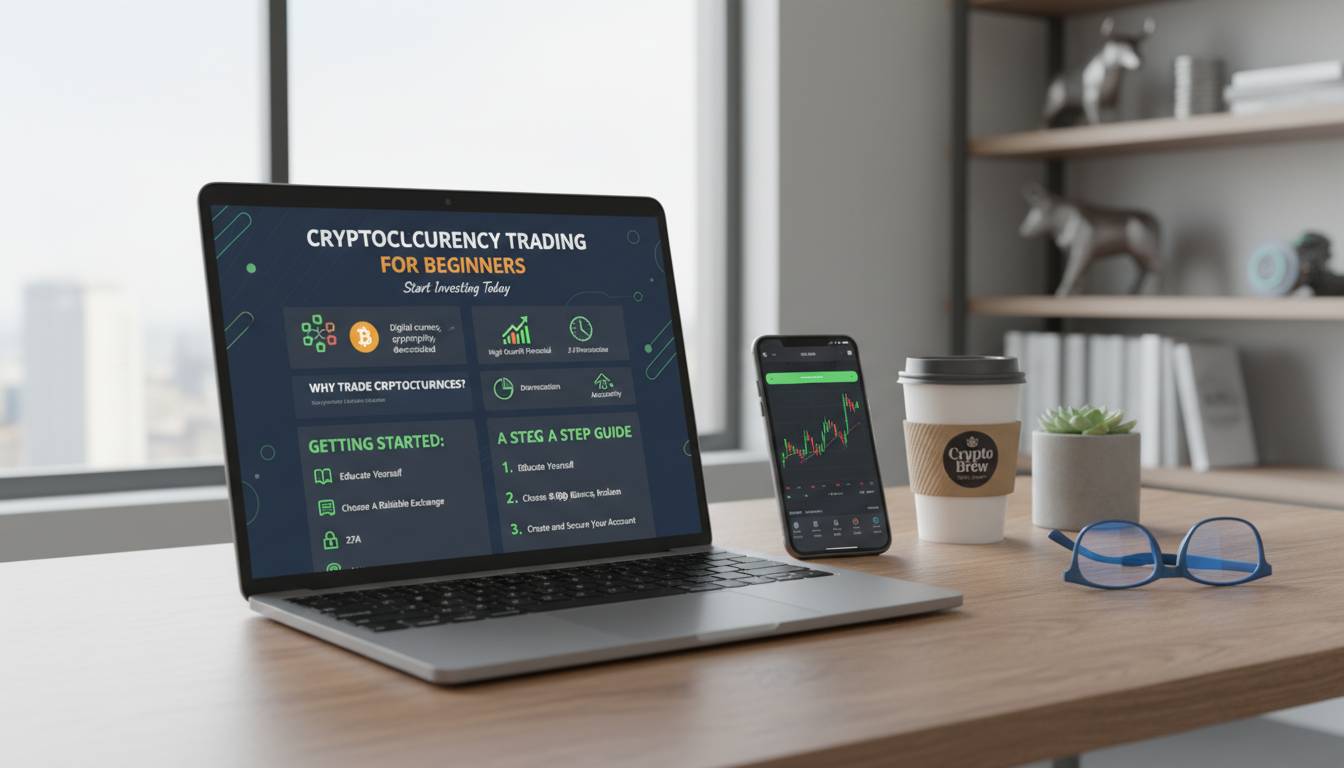
Cryptocurrency trading has become one of the most talked-about ways to invest money in recent years. Billions of dollars move through crypto exchanges every single day, and digital assets that started as experiments by tech enthusiasts have become something mainstream financial institutions now take seriously. If you’re thinking about getting into this space, it pays to understand what you’re actually doing before putting money at risk. This guide covers the basics—from choosing an exchange to managing risk—so you can make decisions instead of guesses.
Understanding Cryptocurrency Trading Basics
Crypto trading happens on online platforms called exchanges. You buy digital assets on one platform and sell them on another when the price moves in your favor. One thing that surprises many beginners: crypto markets never sleep. They’re open 24 hours a day, seven days a week. Stock markets close at the end of the trading day. Crypto doesn’t. That means you can react to price changes anytime, but it also means prices can move while you’re asleep.
Trading and investing get confused a lot, but they’re different approaches. Trading means buying and selling relatively quickly—sometimes within minutes or hours—to capture short-term price swings. Investing usually means buying something and holding it for months or years, betting it will be worth more down the road. Both can make money, but they require different mindsets and time commitments. Trading demands more attention and tends to stress people out more.
The main ways to trade crypto include spot trading (buying the actual asset right now at the current price), margin trading (borrowing money to take bigger positions—this amplifies both wins and losses), and futures (contracts that lock in a price for a future date). Spot trading is where most beginners should start. The other methods come with complexities and risks that catch a lot of people off guard.
How Cryptocurrency Trading Works
Order types matter more than most beginners realize. A market order buys or sells immediately at whatever price is currently available—you get execution certainty but no price control. A limit order lets you set your own price. It might not execute if the market never reaches what you want. A stop-loss automatically sells when the price drops to a level you choose, limiting how much you can lose on a bad trade. Getting comfortable with these three types gives you real control over your entries and exits.
Price charts show history, and traders use them to spot patterns. Crypto prices usually show against the US dollar in pairs like BTC/USD or ETH/USDT. Candlestick charts are the standard visual tool. Each “candle” covers a set time period and shows the opening price, closing price, high, and low. Green means the price went up during that period. Red means it went down. Reading these charts takes practice, and honestly, they don’t predict the future perfectly—but they help you think about where prices might go next.
Trading pairs are worth understanding early. On most exchanges, you can trade one crypto directly for another—Bitcoin for Ethereum, for example, or dozens of other combinations. Some pairs trade a lot (high liquidity), meaning you can get in and out easily. Others trade less (low liquidity), which can mean bigger price swings when you try to buy or sell. Beginners should stick to the most actively traded pairs.
Getting Started with Crypto Trading
Choosing an exchange is the first real decision you’ll make, and it matters. Coinbase, Binance, and Kraken are some of the biggest names with solid track records. They have different fee structures, support different cryptocurrencies, and vary in how easy they are to use. Look at security history, whether they comply with regulations in your country, whether they carry insurance if something goes wrong, and what their customer support is like. None of this is glamorous, but it protects your money.
Setting up an account involves verification steps. Regulations require exchanges to confirm who you are—government ID, proof of address, that sort of thing. This is called KYC (know your customer). It can take anywhere from a few minutes to several days. Yes, it’s annoying. But it’s there to prevent fraud and money laundering, so it’s not going away.
Security for crypto works differently than a bank account. Two-factor authentication (2FA) is non-negotiable—enable it on every account. Hardware wallets—physical devices that store your private keys offline—offer the best protection for crypto you plan to hold long-term. Software wallets are more convenient but vulnerable to hacking. Hot wallets connect to the internet; cold wallets don’t. Know which one holds your crypto and why.
Funding your account happens through bank transfers, wire transfers, or debit cards. Bank transfers take a few business days but usually cost less. Debit cards get you in immediately but often come with higher fees. Figure out what works for your timeline and budget.
Essential Trading Strategies for Beginners
Dollar-cost averaging is the strategy most people should actually use. You invest a set dollar amount on a regular schedule—say, $100 every month—regardless of whether prices are up or down. This removes the impossible task of timing the market bottom. You buy more when prices are low and less when they’re high, smoothing out your average cost over time. It sounds boring. It works.
Trend following tries to ride momentum. If prices have been going up, you look for chances to buy and keep riding higher. If they’re falling, you sell or bet on further declines. The catch is that trends are hard to identify in real time. What looks like a trend might just be noise. Paper trading—practicing with fake money first—helps you figure out what works without losing actual cash.
Support and resistance levels are price points where the market has historically bounced or stalled. Support is where buying pressure has stopped declines before. Resistance is where selling pressure has stopped rallies before. Traders use these as reference points for entry and exit decisions. They aren’t magical predictors, but they’re useful markers.
Risk Management in Crypto Trading
Position sizing determines how much money goes into any single trade. Most experienced traders risk somewhere between 1% and 3% of their total portfolio on any one position. That way, a losing trade hurts, but it doesn’t destroy everything. Even good traders lose regularly—they survive by not losing too much on any single trade.
Stop-loss orders automate your exit. You set a price below your entry, and if the market hits it, the trade closes automatically. You don’t have to watch the screen. You don’t have to hope you’ll act. The stop-loss just does it. This is the simplest risk management tool available, and not using one is a mistake.
The advice to only invest what you can afford to lose matters even more in crypto than other markets. Prices can crash 50% or more in days. If you’re trading with money you need for rent or emergencies, you’ll be forced to sell at the worst possible time. Use disposable income. That’s the honest rule.
Common Mistakes to Avoid
FOMO—fear of missing out—makes people buy at the top. You see prices skyrocketing, rush in to catch the gain, and then watch everything crash back down. It happens constantly. Patience beats FOMO every time. Wait for good entry points. They’ll come.
Transaction fees quietly eat profits. Every trade costs something. Withdrawals cost something. Network fees vary. Active traders who execute many transactions per day can lose significant money to fees alone. Know what you’re paying.
Following tips from social media or celebrities without doing your own research is a recipe for losses. Someone on Twitter hyping a coin doesn’t constitute due diligence. Understand what you’re buying, why it might have value, and what could go wrong. Otherwise, you’re just gambling.
Frequently Asked Questions
Is cryptocurrency trading suitable for beginners? It can be, if you’re willing to learn first. Start small. Stick to spot trading on reputable exchanges. Don’t touch margin or futures until you understand what you’re doing. The volatility in crypto means you can lose money fast—so prepare accordingly.
How much capital is required to start trading cryptocurrency? Some exchanges let you start with $10 or $20. That’s actually enough to learn with. You don’t need thousands. You need discipline and education.
Which cryptocurrency should beginners trade first? Bitcoin and Ethereum are the standard recommendations. They have the most trading volume, the most information available, and relatively more stable behavior than tiny coins that can move 20% in hours.
Is cryptocurrency trading profitable? Some people make a lot of money. Some lose a lot. Most retail traders, according to the data, lose money. That doesn’t mean you will—but it means you should have realistic expectations and a strategy, not just hope.
What is the difference between trading and investing in cryptocurrency? Trading is short-term—hours, days, weeks. Investing is long-term—months, years. Traders chase price movements. Investors bet on fundamental value over time.
How do I protect my cryptocurrency from theft? Strong passwords, 2FA, hardware wallets for big holdings, never share your private keys, use reputable exchanges, and be skeptical of unsolicited messages or links. Basic internet security applies here.
Conclusion
Crypto trading offers real opportunities, but it’s not a free money machine. Success comes from learning first, starting small, and managing risk relentlessly. Pick a reputable exchange, understand order types and trading pairs, use dollar-cost averaging instead of trying to time the market, set stop-losses, and never trade with money you can’t afford to lose.
The crypto market keeps changing—regulations are shifting, institutions are getting involved, new technologies keep emerging. That means you’ll never stop learning. But if you approach it with patience and discipline instead of get-rich-quick fantasies, you stand a reasonable chance of doing well. Start slow, keep learning, and adjust as you go.